Work & Study · Free printable
Free Character Traits Graphic Organizer
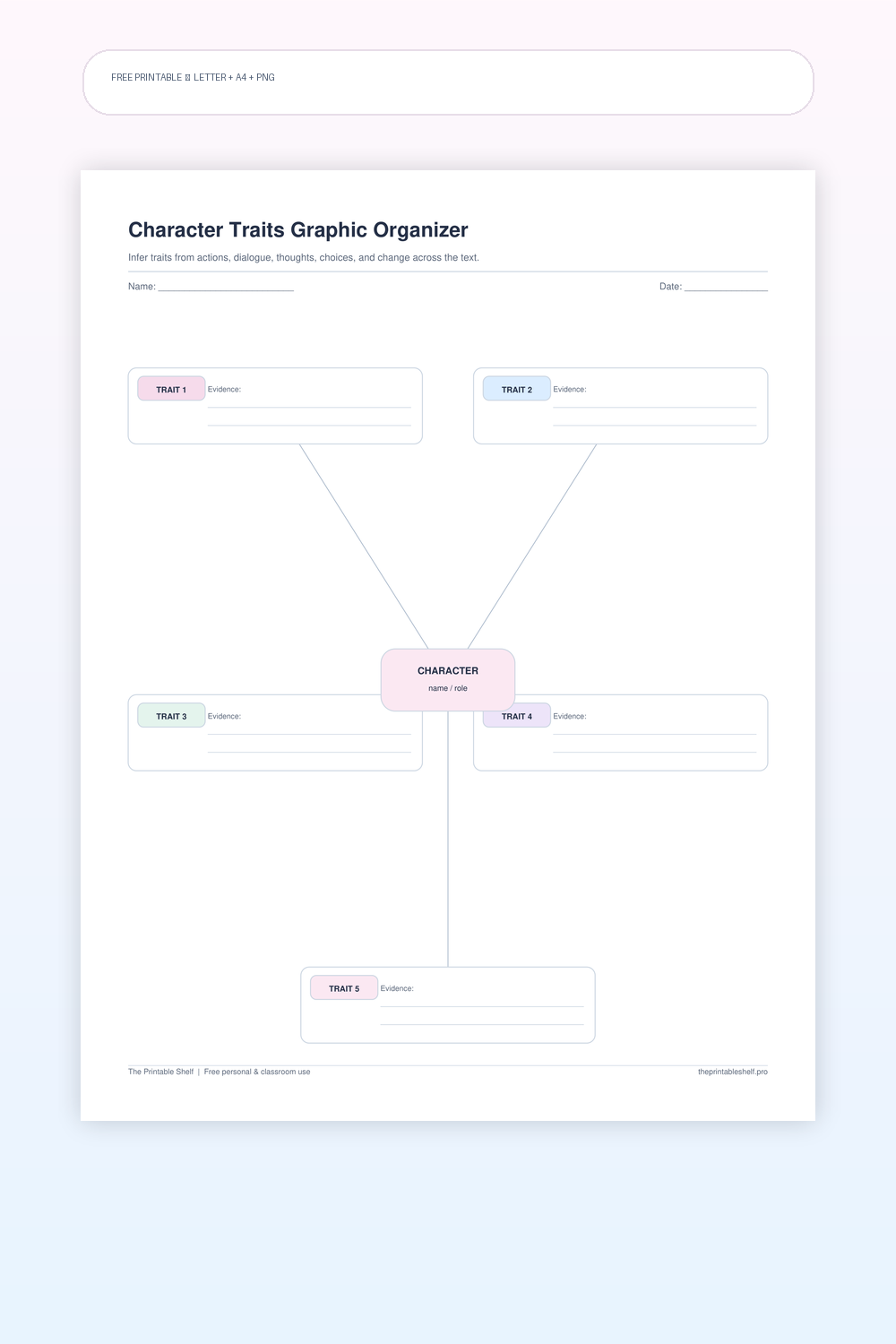
This character traits organizer puts the character in the center and pairs each trait with evidence, so students move beyond adjective lists. Use actions, dialogue, thoughts, choices, and other details from the text to justify each trait. It works with novels, short stories, read-alouds, biographies, and character comparison activities.
Edited by Tessa Vaughn · Planning & Organization Editor
Free download
Choose your file size
Print at 100% / Actual Size for the cleanest margins. Pick the paper size your printer normally uses.
Share to Google Classroom ↗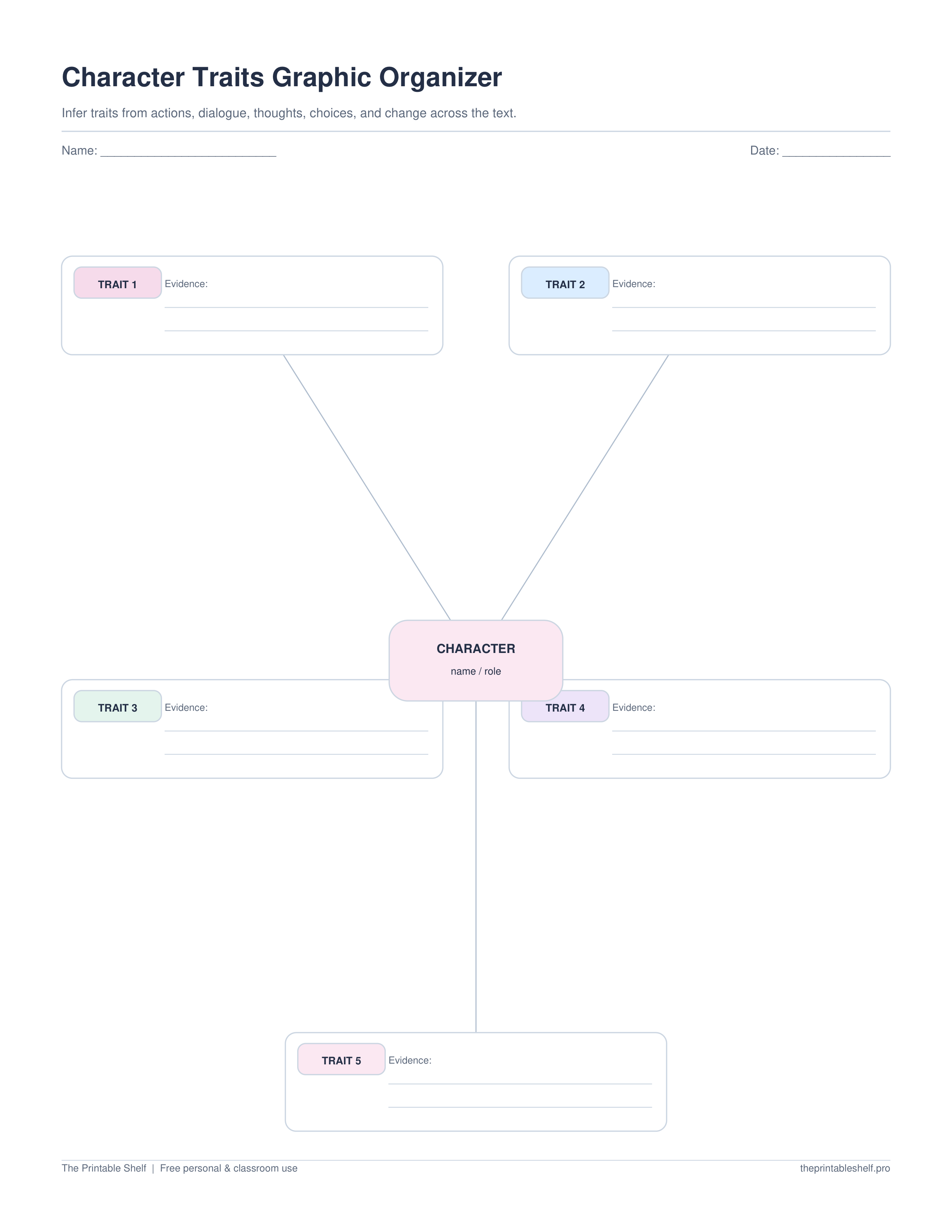
No sign-up required · personal/classroom use
More useful layouts
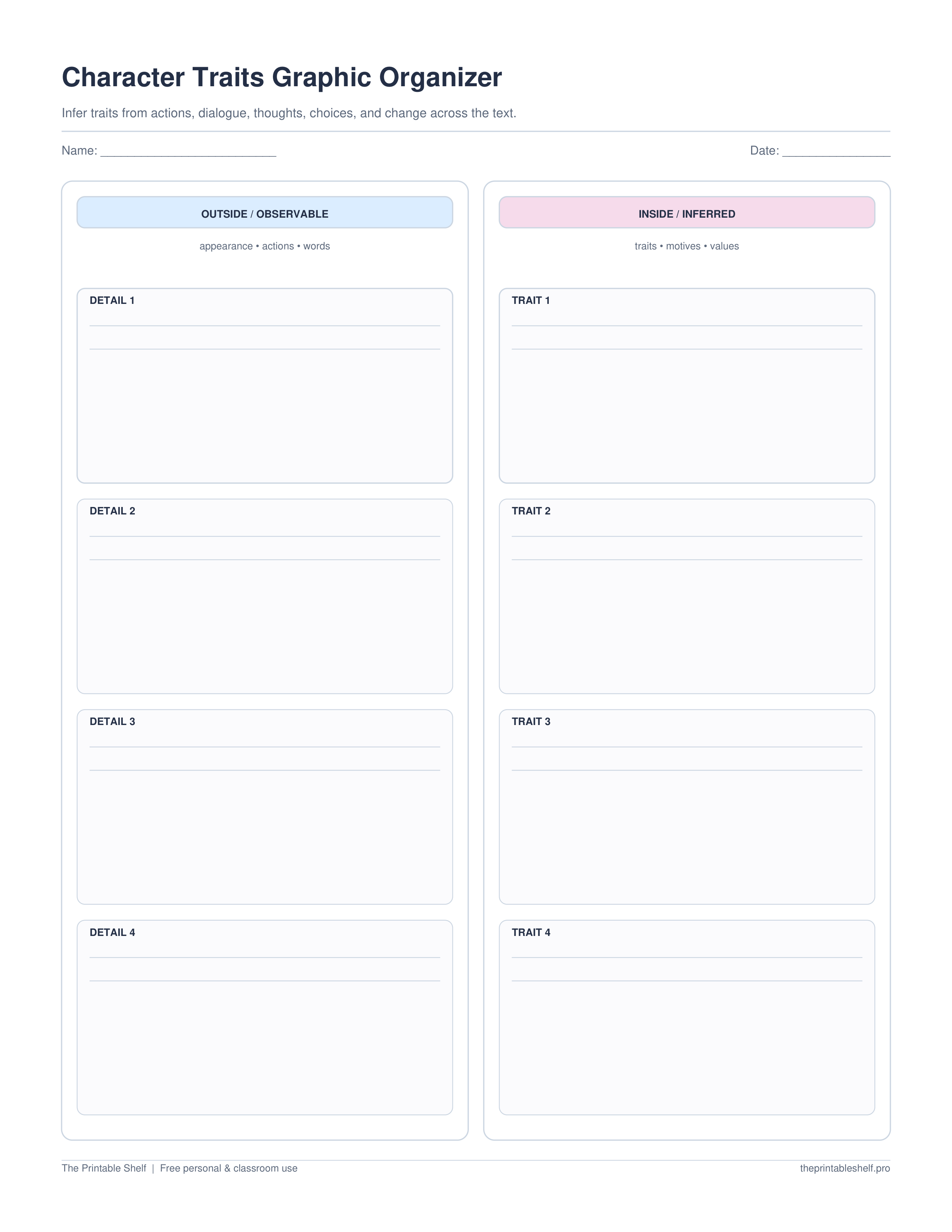
Inside vs. outside traits
Separates observable appearance/actions from inferred personality, motives, and values.
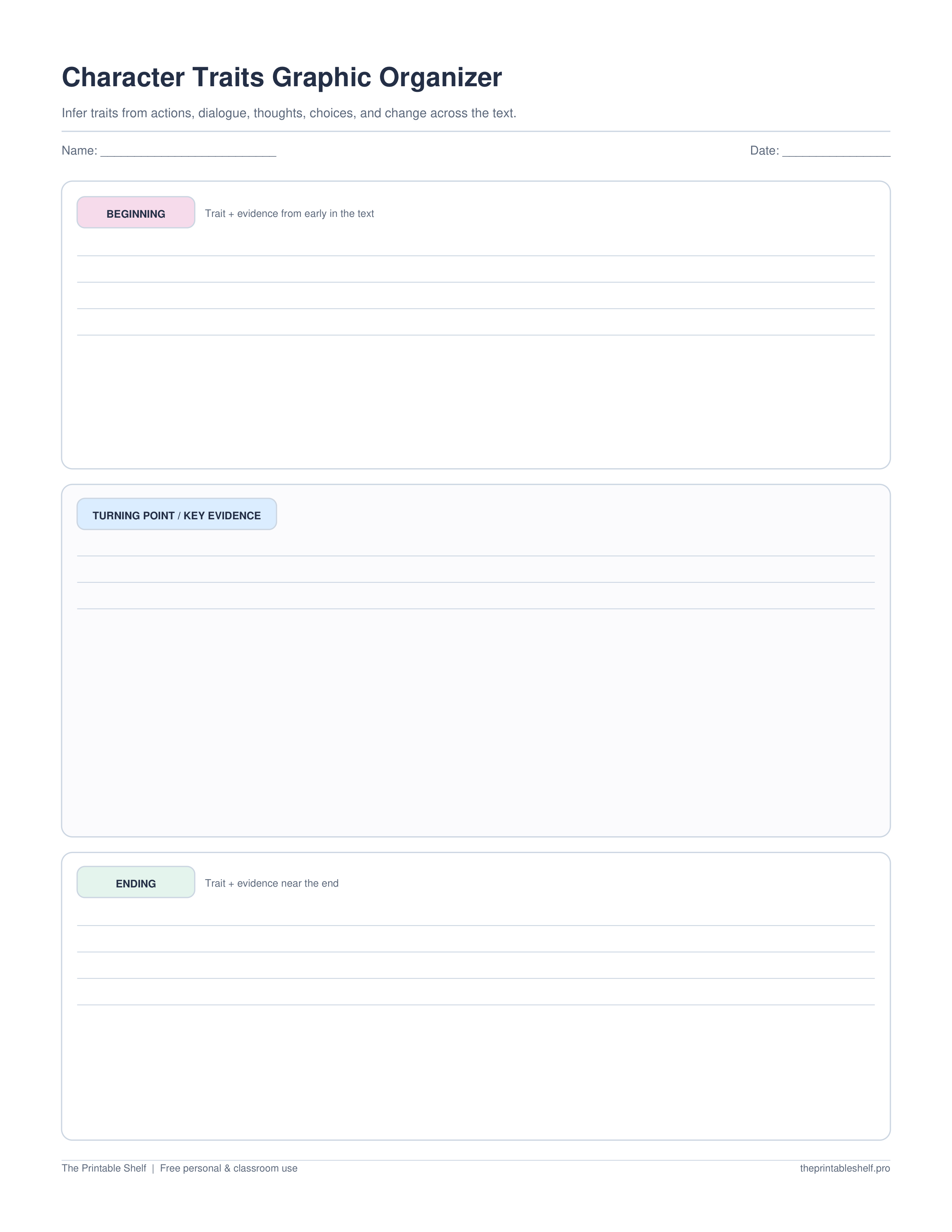
Character change
Tracks a beginning trait, turning-point evidence, and an ending trait to make development visible.
About this printable
A reusable character-analysis page designed to make evidence part of the task. Instead of asking for a list of adjectives with no support, each branch asks for a trait plus evidence from the text. That makes the sheet useful for reading response, discussion preparation, and paragraph planning rather than simple vocabulary practice.
How to get the most from it
Write the character’s name in the center, then choose one trait you can actually support from the text. Traits describe a relatively consistent quality—such as patient, stubborn, generous, cautious, or ambitious—not a temporary feeling like tired or excited. If you are unsure, start with a specific action the character takes and ask what quality that action might reveal.
For every trait, add evidence beside it. Evidence can be an action, a line of dialogue, a repeated choice, a thought, or the way other characters respond. Avoid copying a long quotation when a short paraphrase will do. The point is to show the connection: ‘loyal — stays with his friend even after everyone else leaves’ is more useful than writing ‘loyal’ by itself.
Use more than one moment when a trait is important to the story. One isolated action can be misleading, especially if the character is under unusual pressure. If a character behaves differently in different scenes, do not hide the contradiction. You can write ‘usually cautious, but takes a risk when…’ or use two branches to show how the character changes over time.
After the organizer is filled, look for the traits with the strongest and most relevant evidence. Those are the best candidates for a reading-response paragraph or discussion answer. A paragraph can begin with the trait claim, use the evidence the task needs, and explain what that evidence shows. In this way, the printable becomes a planning tool for evidence-based writing instead of an endpoint.
For a character-change lesson, print two copies and label them Beginning and End, or divide the evidence by early and late chapters. Compare which traits stay stable and which shift as the character responds to events. For younger readers, provide a small bank of trait words but still ask for evidence. For older readers, add a page number or chapter reference when the task benefits from quick source checking or formal citation.
When two students choose different traits for the same character, use the disagreement as a text-evidence check instead of deciding immediately that one answer is wrong. Each student should point to the scene, action, or dialogue that supports the word. If both interpretations are defensible, record both. That habit teaches that character analysis is an evidence-based inference, not a hunt for one hidden adjective in the teacher’s answer key.
Customize instead
Need a different title, paper size, or orientation? →
Use the free Graphic Organizer Maker to build a custom Venn, KWL, Frayer, story map, T-chart, main-idea, sequence, or cause-and-effect page.
Best uses for this template
Ideas for using this page
During a novel or read-aloud
Add traits only when the text gives you evidence, then revisit the page as the character makes new choices.
Before writing a paragraph
Circle the strongest trait, select the evidence needed to support it for the task, and use the organizer as a compact outline for a character-analysis response.
Tracking character change
Use separate colors, sections, or copies for early and late evidence to show how the character develops across the text.
Mistakes to watch for
Listing emotions as traits
Ask whether the word describes what the character is generally like, not just how the character feels in one scene.
Choosing traits before reading for evidence
Start with actions or dialogue and infer a trait from what the text actually shows.
Using evidence without explanation
Add a short note explaining how the action or quotation demonstrates the selected trait.
Included layout options
Trait + evidence web
Connect every inferred trait to support from the text
Layout: Character center with five trait/evidence branches
Inside / outside
Separate what can be directly observed from what must be inferred
Layout: Two-column observable-details vs inferred-traits layout
Character change
Track development rather than a static adjective list
Layout: Beginning trait/evidence, turning point, ending trait/evidence
Classroom fit
Where it fits: grades and standards
Suggested grade bands
These are practical use ranges, not hard limits. Text complexity and the amount of teacher modeling matter more than the worksheet alone.
Good fit for
Scaffold level: Standard.
Common Core crosswalk
No narrow standards code is listed for this general-purpose template. Use it where the thinking task fits your local curriculum.
Quick answers
What is a character trait?
A character trait is a relatively lasting quality shown through a character’s actions, words, thoughts, and choices, such as brave, impatient, generous, or secretive.
What counts as evidence for a character trait?
Use a specific action, dialogue, thought, repeated behavior, or another text detail that supports the trait you chose.
Can this be used for biographies?
Yes. For a real person, replace fictional story evidence with documented actions, decisions, quotations, or events from the biography or source.
Guides that go with this page
See where this organizer fits, when a different layout works better, and how to turn the completed page into a useful next step.

How to Use Graphic Organizers Effectively (Without Turning Them Into Busywork)
Learn how to choose, model, scaffold, and reuse graphic organizers so students think with them instead of simply filling in boxes.
Read guide →How to Make Inferences From Text Without Guessing
Learn how to make inferences from text using clues, relevant background knowledge, evidence checks, and a simple worked example for reading practice.
Read guide →Keep organizing
You might also like
Free printable
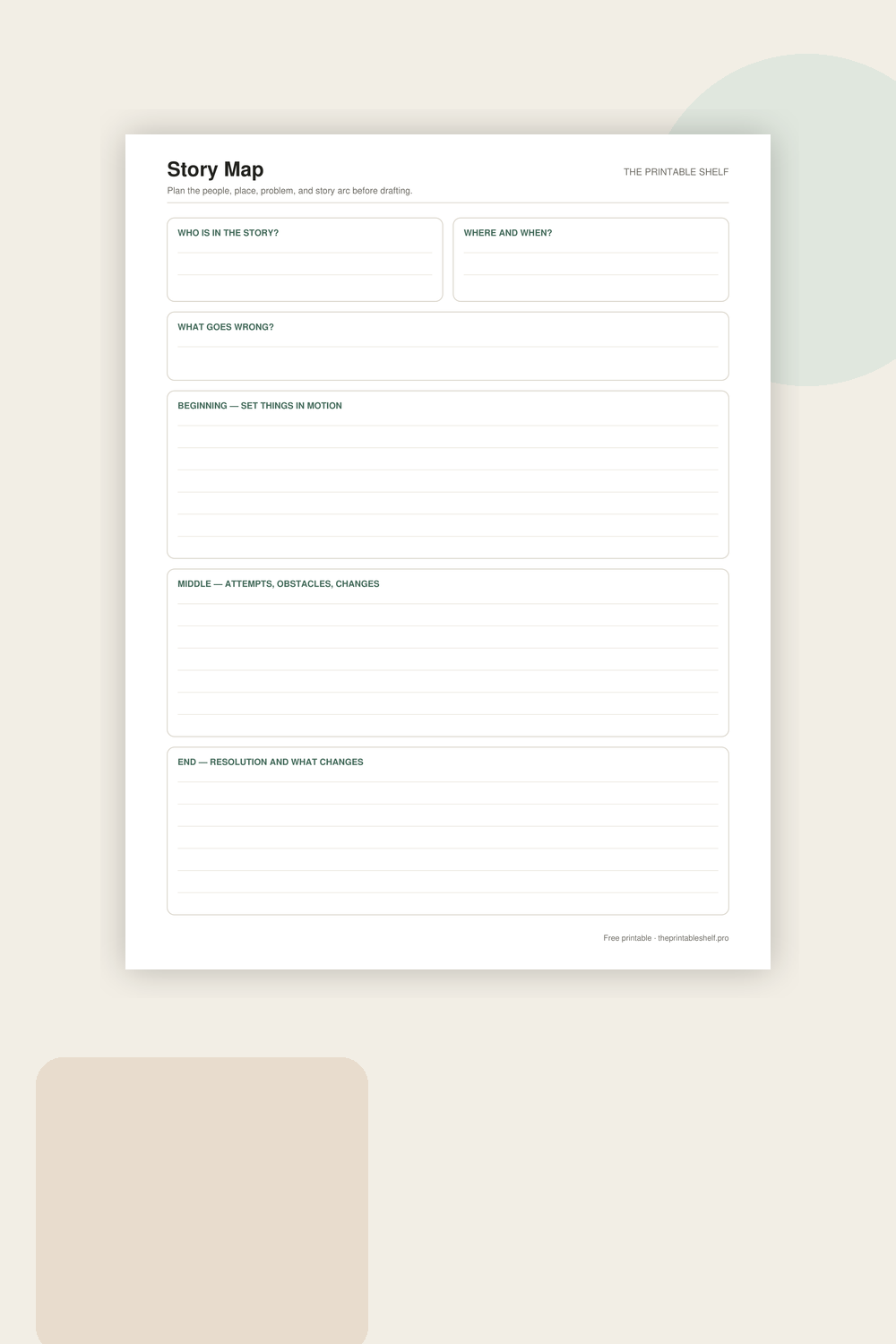
Printable Story Map Template
A one-page story organizer that separates the pieces students often mix together. Characters and setting establish who and where, the problem gives the story something to resolve, and three larger boxes organize the sequence into beginning, middle, and end. It works for reading response or prewriting.
Free printable
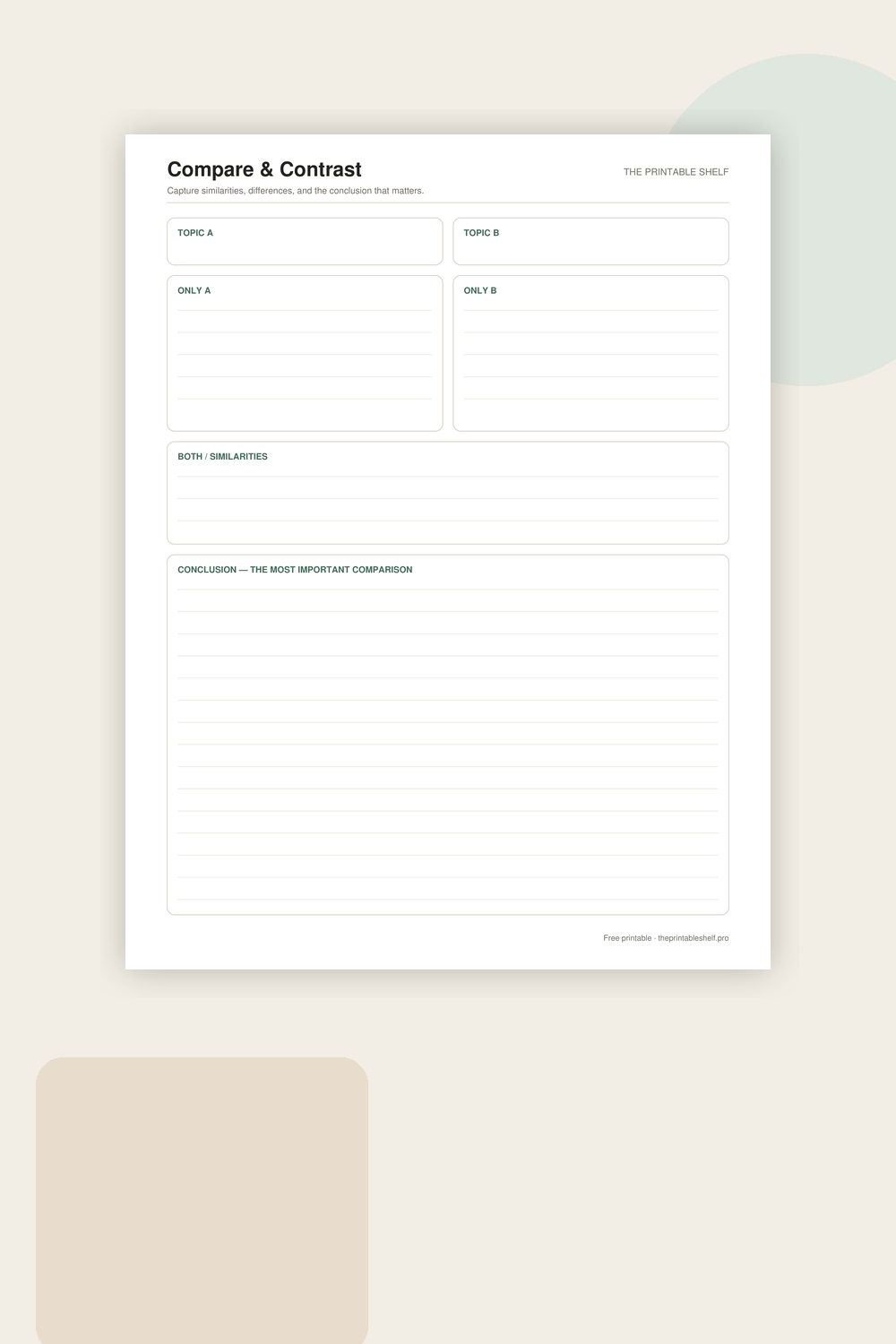
Compare and Contrast Graphic Organizer
A structured alternative to a Venn diagram for learners who need more writing space. Two difference boxes sit side by side, a full-width similarities area keeps shared traits together, and the final conclusion section turns the collected notes into an actual comparison rather than stopping at a list.
Free printable
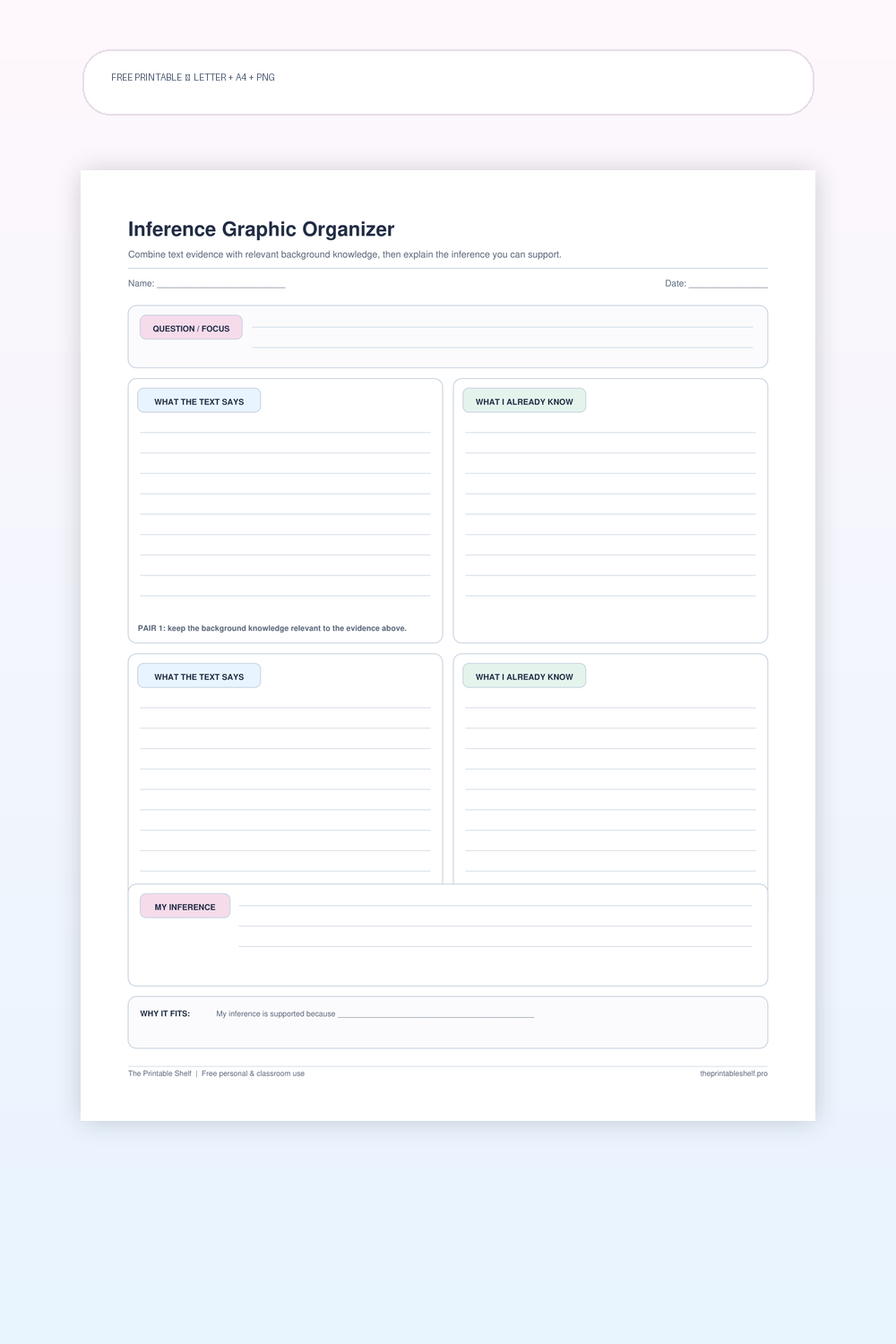
Inference Graphic Organizer
A reading-comprehension scaffold for conclusions that are implied rather than stated directly. The layout separates what the text actually provides from what the reader already knows, then asks for an inference supported by both. That distinction matters because an inference is not a guess or personal opinion; it should be a conclusion that remains accountable to textual clues and can be revised when new information changes the evidence.