The Printable ShelfFree pack

Focused printable collection

Free Writing Organizers & Paragraph Planner Templates (PDF)

Free paragraph organizer templates, idea organizers, and writing organizers for opinion, informational, narrative, and how-to writing, plus writing paper, as PDF and PNG.

A writing organizer is a planning page for sorting ideas before a draft begins. A paragraph organizer can help a writer shape one focused point and its support, while other pages guide opinion pieces, explanations, stories, procedures, and research. The collection brings these writing tasks together so teachers, families, and students can choose a page that fits the work ahead.

Use the Where to start section below to compare a paragraph organizer with an idea organizer and other writing organizer options. All 14 printables are free, need no sign-up, and offer PDF files for US Letter or A4 paper plus high-resolution PNG files, so readers can select a format before planning or drafting.

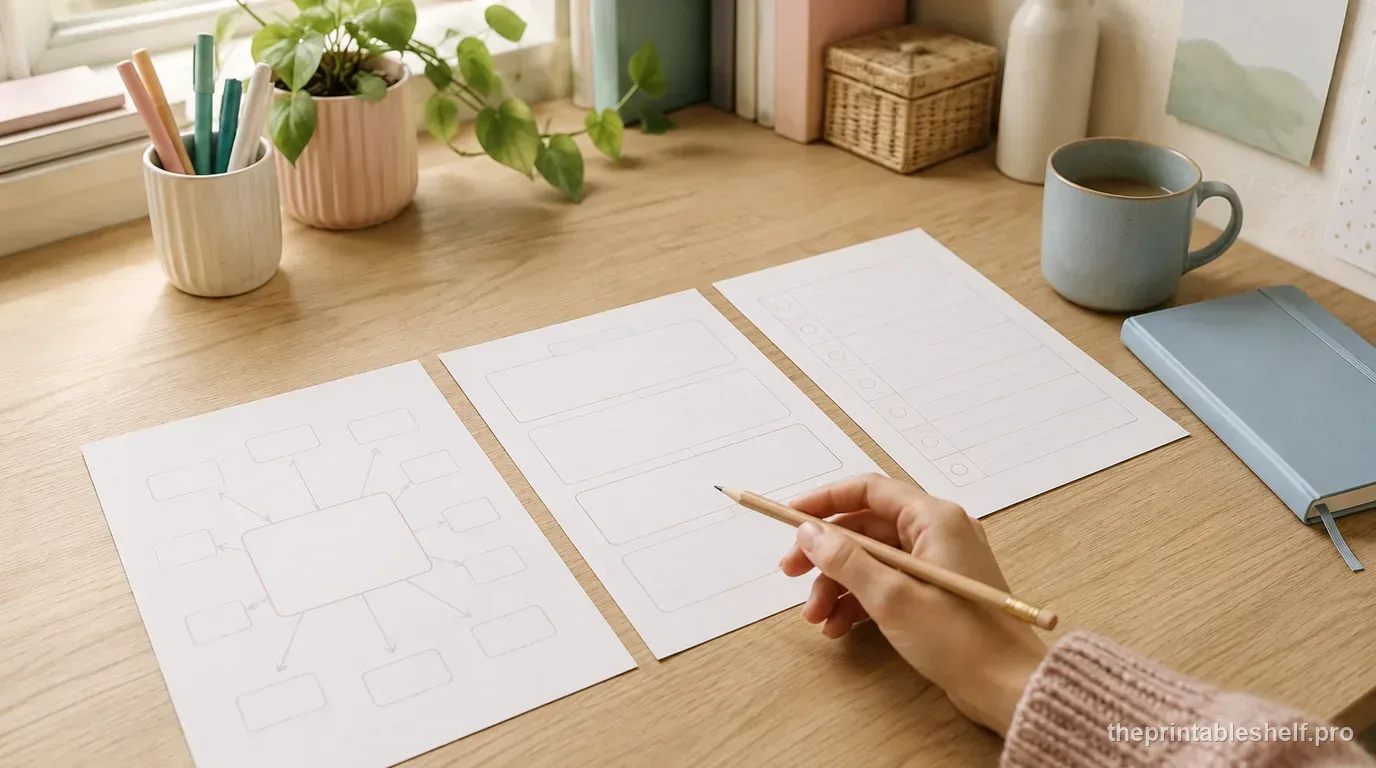
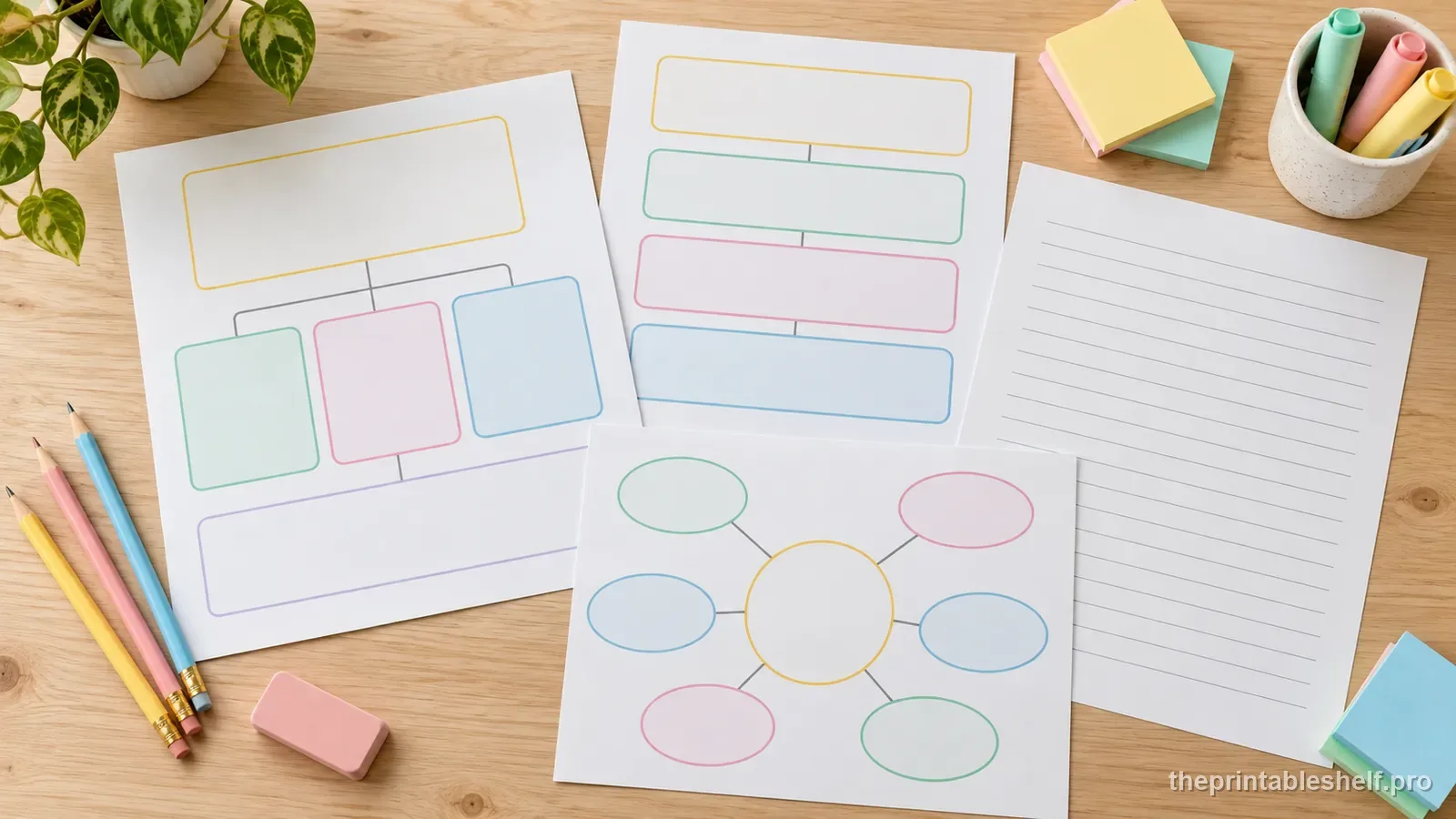
Blank paragraph, four-square, lined, and concept-web pages with pencils and pastel supplies on a light wooden desk.

Which organizer should I use?

Paragraph organizer templates: where to start

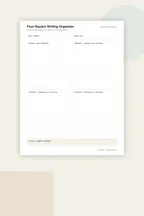
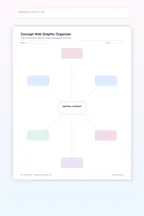
For one planned paragraph, compare a paragraph organizer that separates its topic sentence, supporting ideas, explanations, and closing sentence with the four-square page's opening box, three support boxes, and closing strip. When the goal is to generate possibilities first, an idea organizer such as the concept web starts with a topic and branches into related thoughts; each is a writing organizer for a different prewriting need.

Paragraph planners and idea organizers

Paragraph work may begin with one main point or with several possible directions. The paragraph planner gives each part of a focused paragraph a job; four-square separates the opening, support, and close; the concept web lets writers spread related ideas around a central topic before choosing what to develop.

Genre planners: opinion, informational, narrative, and how-to

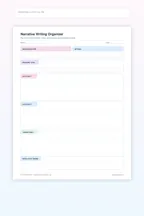
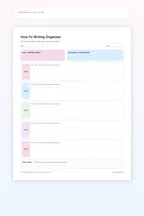
Different genres call for different decisions before drafting. Opinion planning connects a position to reasons and their support, informational writing groups facts with explanations, narrative planning links story elements to events, and the how-to page checks that a reader has enough ordered guidance to follow a process.

Evidence, summary, and research writing

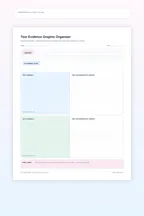
Evidence-based writing begins by deciding what a source supports and how to explain that connection. The text-evidence page links details to a claim, CER separates the parts of an explanation, and the summary page ranks information; essay and source-note planners help shape longer work from supported ideas.

Writing paper for drafting

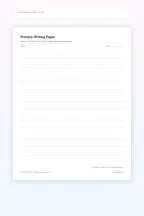
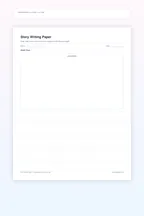
Drafting pages give writers room to turn a plan into handwritten work. Primary paper offers handwriting guides for early composition, while story paper provides standard lines and optional illustration space for a planned narrative or a final handwritten copy.

Three ways writing organizers fit real assignments

English language arts · Grade 3

Shape an opinion paragraph

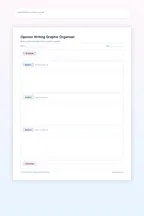
For a Grade 3 opinion task, a teacher may invite learners to begin with the Opinion Writing Organizer, stating a position and listing reasons with an example or evidence for each. The Four-Square Writing Organizer can then help them choose an opening idea, arrange supporting details, and plan a closing sentence. Before drafting, students may say the paragraph aloud and check that the support connects to the position. The pages guide planning; the draft itself can go on writing paper so the boxes remain notes rather than the whole composition.

Opinion Writing Graphic OrganizerFour-Square Writing Organizer Printable

Social studies · Grade 6

Move from source to summary

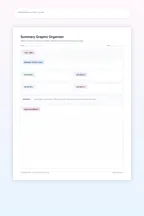
For a Grade 6 social studies reading, a parent or teacher can first have students use the Research Notes and Source Organizer to keep source details with paraphrases, quotations, and locators. The Summary Graphic Organizer then helps them identify a central idea, select essential details, and consider what to leave out before writing a shorter version. Students may check the summary against the source and use the notes to distinguish captured information from their own wording. The sequence supports a source-based response without asking the organizer to supply the finished prose.

Research Notes and Source Organizer PrintableSummary Graphic Organizer

Science · Grade 9

Connect evidence to an explanation

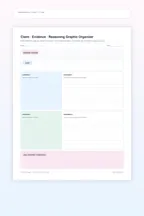
In a Grade 9 science assignment, the Claim-Evidence-Reasoning Organizer lets students state an answer, select observations or data, and explain how scientific ideas connect evidence to the claim. If they need to gather possibilities before settling on a structure, the Concept Web can branch from the topic into related questions or concepts. A teacher may ask the class to review those notes, choose relevant material, and then write the explanation in a separate draft. The organizer pages support planning while leaving the final account in the writer's own words.

Claim Evidence Reasoning (CER) Graphic Organizer PDFConcept Web Graphic Organizer

Frequently asked questions

What is a writing organizer?

A writing organizer is a planning page used before a draft to help sort ideas and decide how they fit together. The paragraph-writing page plans a focused paragraph, the opinion page connects a position with support, and the concept web branches related ideas from a topic. Writers can use notes from the page when they begin composing.

How do you organize a paragraph?

Start by naming the paragraph's topic sentence, then gather supporting ideas and add an explanation or evidence for each. The paragraph-writing organizer also leaves room for a closing sentence. The four-square page uses an opening box, three support boxes, and a closing strip. Writers can use either page to plan the parts before drafting in their own words.

What is a paragraph planner?

A paragraph planner is another name for a page that helps arrange ideas before writing one paragraph. The paragraph-writing organizer separates a topic sentence, three supporting ideas with explanations or evidence, and a closing sentence. Four-square places an opening in one box, support in three boxes, and the close in a strip, giving the same broad task a different layout.

What are the types of writing organizers?

No official catalogue settles the types of writing organizers, and references arrange them in different ways. This page groups the printables under four headings: paragraph planners and idea organizers; genre planners; evidence, summary, and research writing; and writing paper for drafting. A separate paragraph section helps readers compare one-paragraph planning with idea generation.

Are these writing organizers free to download as PDFs?

Yes. All 14 are free to download, and no sign-up or registration is needed. Every one of the pages has PDF files for US Letter and A4 paper, along with a high-resolution PNG. Open the page for the organizer you want and select a format for printing or viewing. The collection includes both planning sheets and writing paper.

Do the writing organizers include completed examples?

Five of the 14 printables have a completed example. The names are Claim-Evidence-Reasoning, Text Evidence, Summary, and Essay Outline; Research Notes and Source Organizer is the fifth. The other pages do not list a completed example. To check a specific printable, look for its “Completed example” section on that page.

How can students use a writing organizer without writing the whole draft in the boxes?

Write brief words or phrases in the spaces, then say how those notes fit together in complete sentences. After that, draft on lined paper or another writing page so the organizer remains a plan. If the printable has a completed example, compare its use of the sections with your own notes. Keep only details that serve the piece you intend to write.
Use the templates well

Related guides

Explore other Work & Study collections