Focused printable collection
Free Reading Graphic Organizers
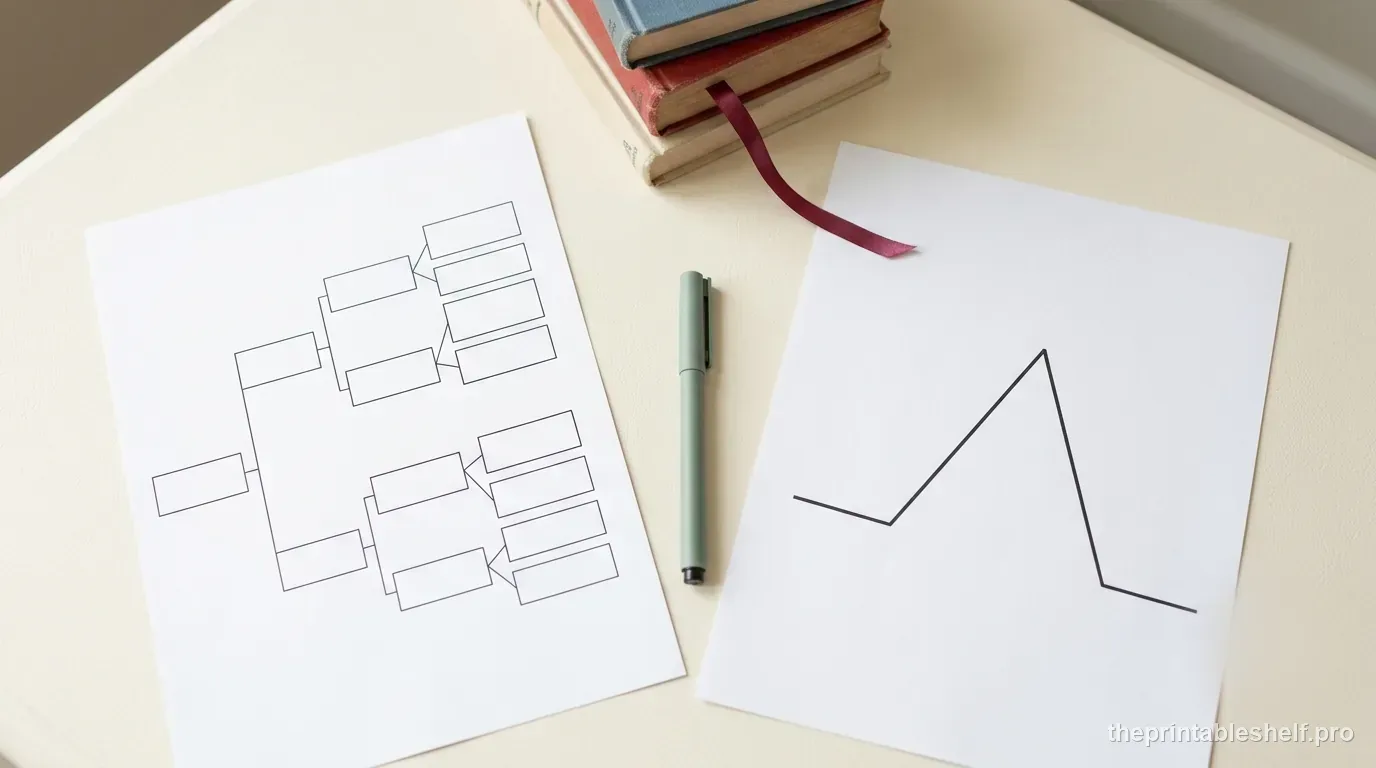
Printable reading organizers for plot, theme, point of view, context clues, inference, text evidence, text structure, summary, comparison, and comprehension.
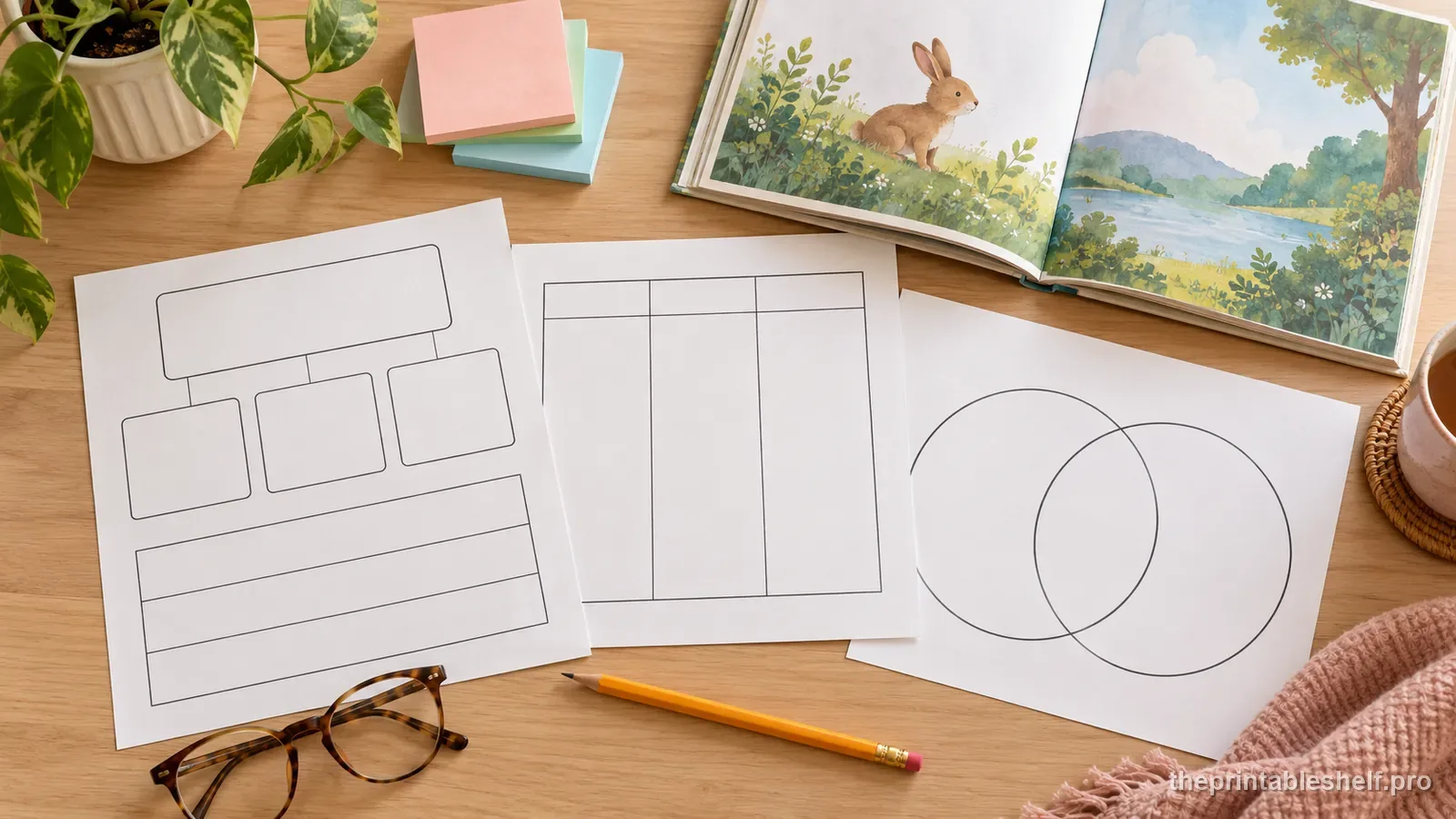
Reading organizers work best when they make a text relationship easier to see. A story map helps a reader connect characters, setting, problem, important events, and resolution; a main-idea page separates a central point from supporting details; a sequence chart keeps order visible; and a cause-and-effect chart asks for a stronger why-and-result relationship.
The pages here are grouped around comprehension rather than around a single grade or subject. They can be used with fiction, nonfiction, history, science, or source comparison when the organizer matches the reading move. The linked guides add modeling ideas, common mistakes, and decision rules for choosing between similar structures.
A useful progression is model, guide, then release. Show how one or two entries are selected from a familiar text, let the learner complete the next entries with support, and only then ask for independent use. The goal is not a full page; it is a clearer explanation of what the text says and how its important parts relate.
28 free downloads
Printables in this collection

Free printable
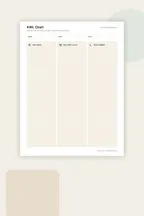
Printable KWL Chart
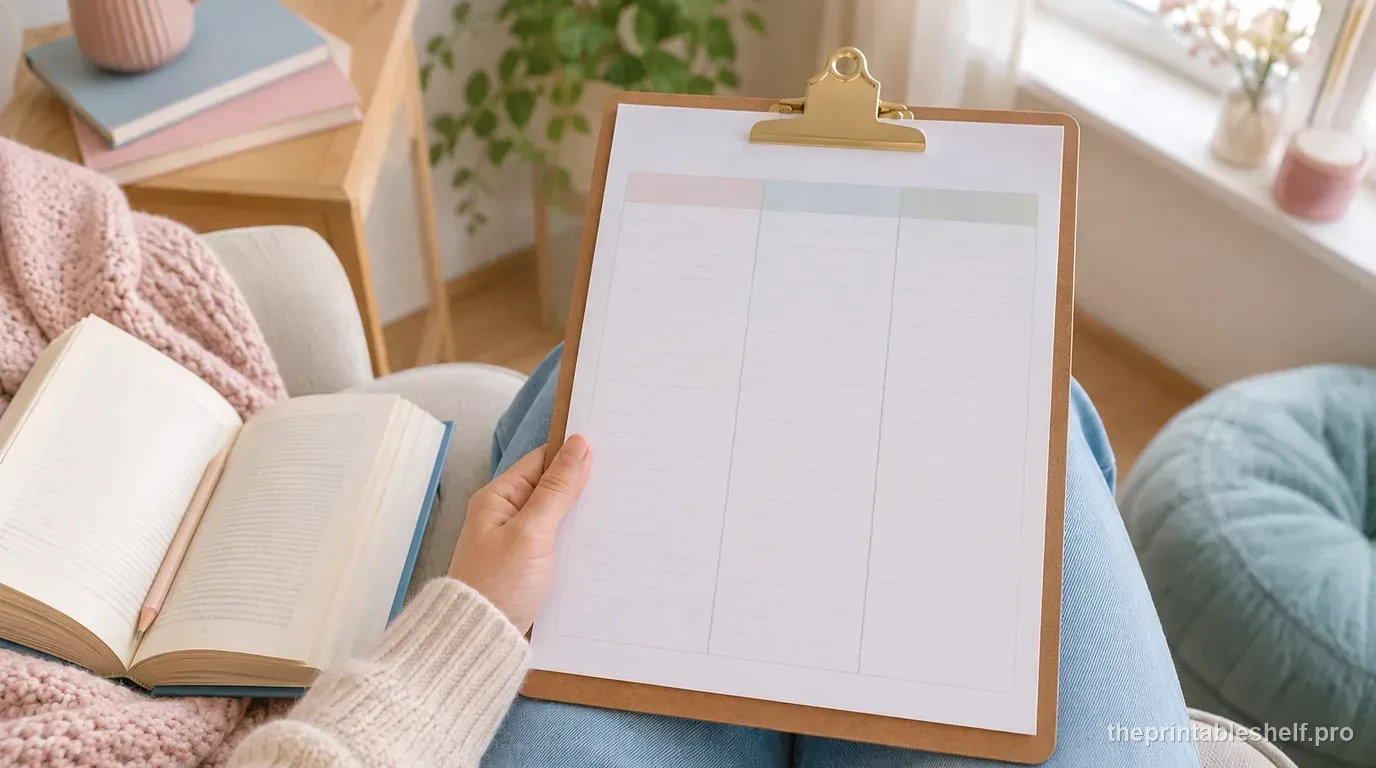
A three-column learning organizer for activating prior knowledge and making questions visible before a lesson begins. The K column records what the learner thinks they know, W captures questions or wonderings, and L is completed afterward with new information, corrections, and answers discovered during learning.

Free printable
Printable Story Map Template
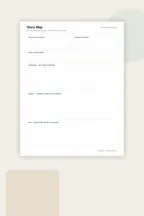
A one-page story organizer that separates the pieces students often mix together. Characters and setting establish who and where, the problem gives the story something to resolve, and three larger boxes organize the sequence into beginning, middle, and end. It works for reading response or prewriting.

Free printable
Main Idea and Details Graphic Organizer
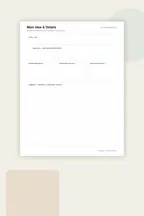
A reading and note-taking organizer built around one central idea and three pieces of support. The extra topic box helps learners distinguish a broad subject from the author’s actual main point, while the final summary asks them to recombine the important information in their own words.

Free printable
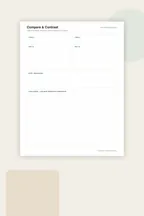
Compare and Contrast Graphic Organizer
A structured alternative to a Venn diagram for learners who need more writing space. Two difference boxes sit side by side, a full-width similarities area keeps shared traits together, and the final conclusion section turns the collected notes into an actual comparison rather than stopping at a list.

Free printable
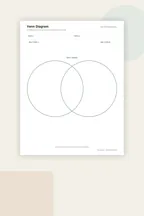
Printable Venn Diagram Template
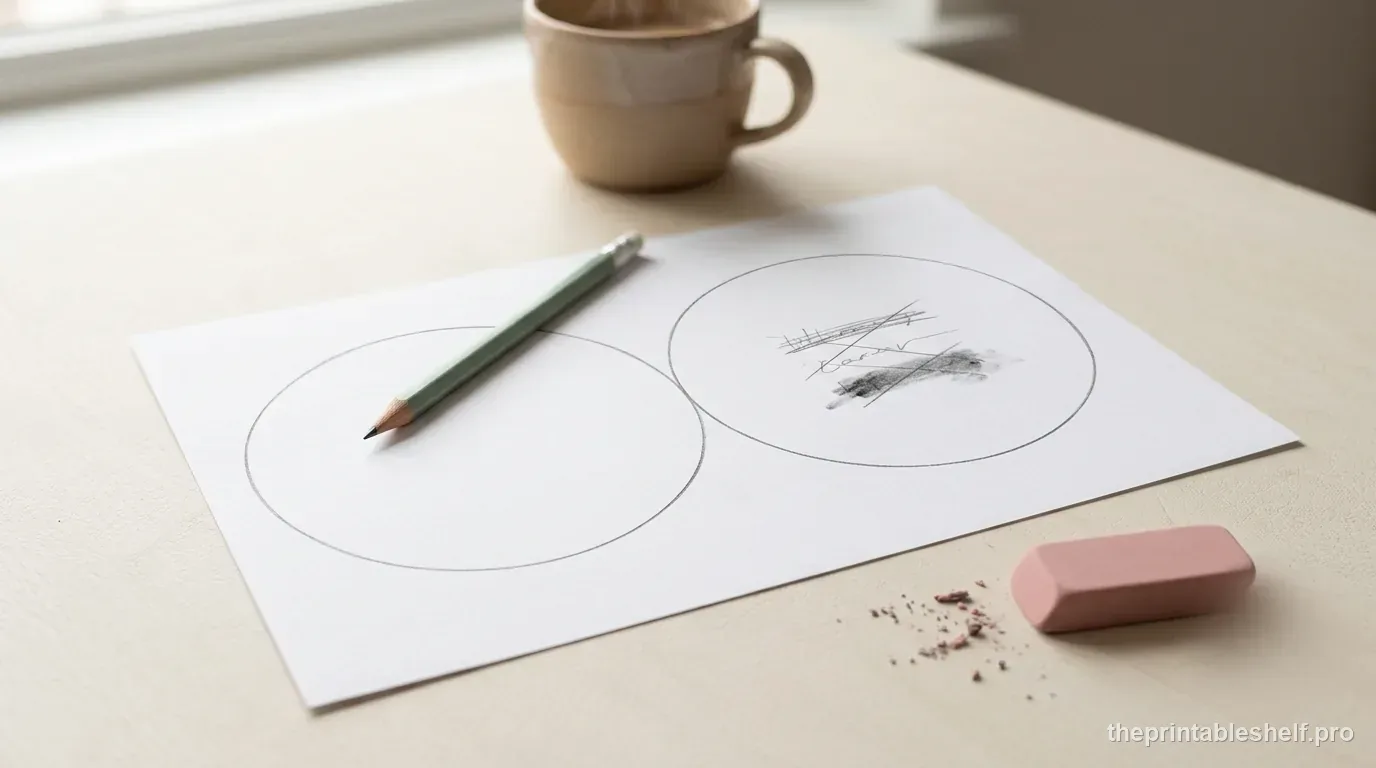
A clean two-circle comparison organizer with dedicated topic fields, generous writing space, and light writing guides. The page is intentionally simple so the visual relationship does the teaching: differences stay on the outside, while anything true of both topics belongs in the middle overlap.

Free printable
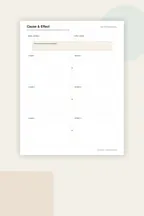
Cause and Effect Graphic Organizer
A one-page organizer for examining causal relationships instead of simply listing events. Each cause is visually connected to its effect, and the focus box at the top gives the page one clear subject so students can analyze several relationships without losing track of the larger event, text, or concept.

Free printable
Sequence of Events Graphic Organizer
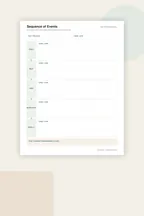
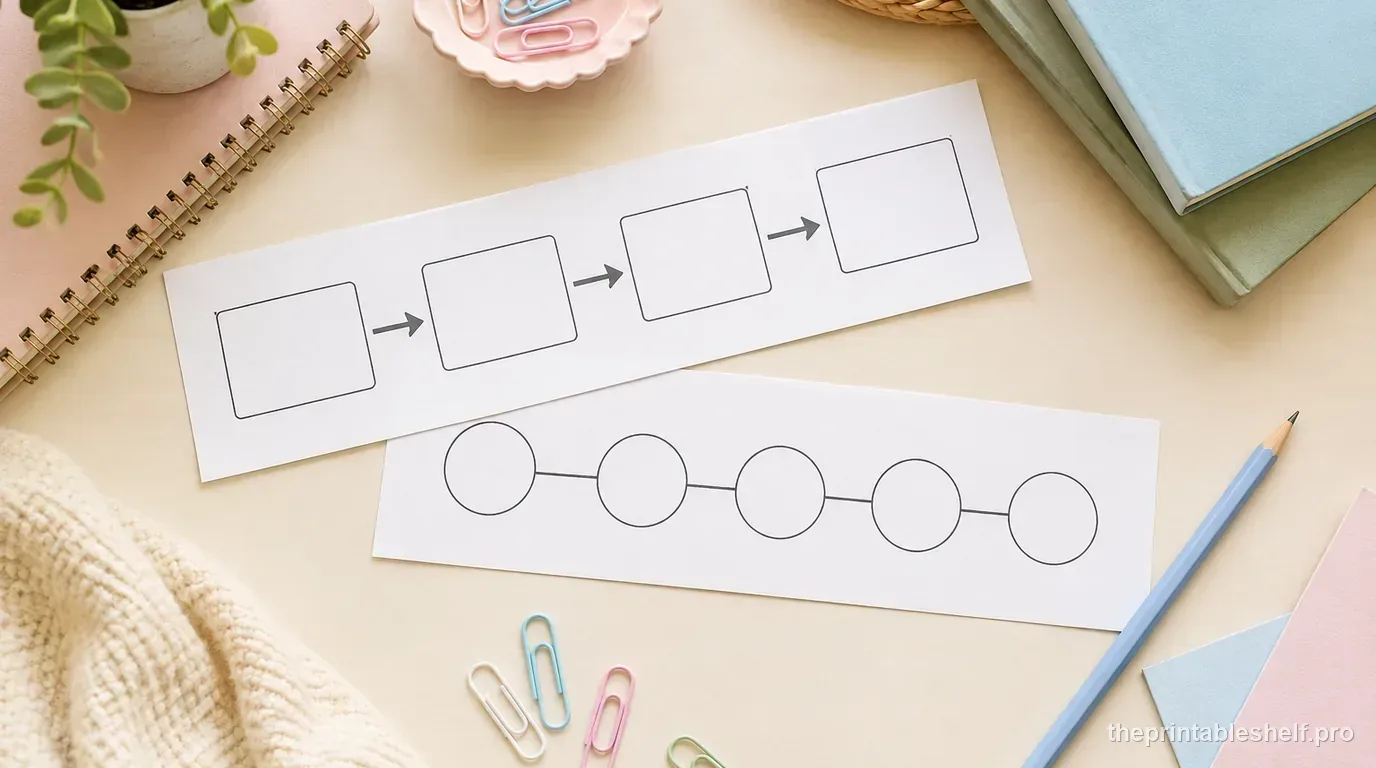
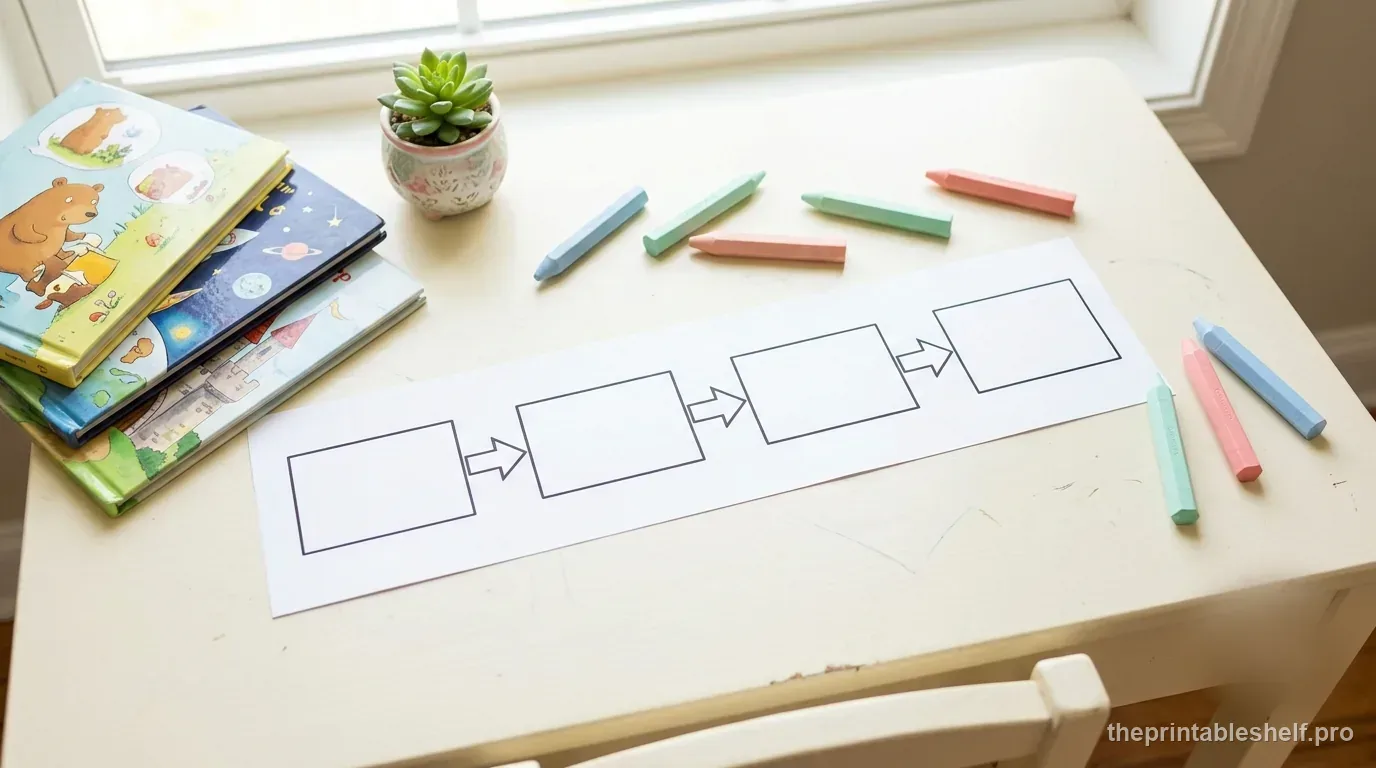
A vertical sequence chain that makes order visible without squeezing each event into tiny boxes. Five linked writing areas support short event summaries or process steps, and a final reflection box pushes the learner to notice the overall change from beginning to end rather than merely copying chronology.

Free printable
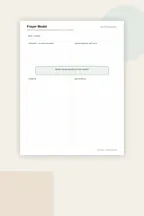
Printable Frayer Model Vocabulary Template
A classic four-part vocabulary and concept organizer upgraded from the site's older vocabulary map. Instead of stopping at a copied definition, the page asks for defining traits, clear examples, and deliberate non-examples, which helps learners distinguish what belongs to a concept from what only looks similar.

Free printable
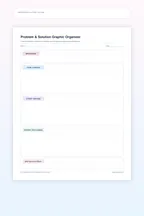
Problem and Solution Graphic Organizer
A one-page reading and prewriting organizer built around more than two empty boxes. The page separates the central problem from clues or attempts in the middle and the final solution at the bottom, so learners can show how a solution develops rather than jumping straight from ‘problem’ to ‘solution.’

Free printable
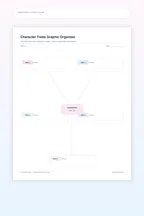
Character Traits Graphic Organizer
A reusable character-analysis page designed to make evidence part of the task. Instead of asking for a list of adjectives with no support, each branch asks for a trait plus evidence from the text. That makes the sheet useful for reading response, discussion preparation, and paragraph planning rather than simple vocabulary practice.
Free printable
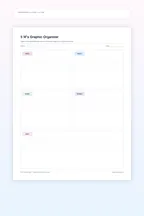
5 W's Graphic Organizer Printable
A five-part fact and comprehension organizer with one clear writing area for each of the classic 5 W questions. The structure is simple enough for elementary reading work but flexible enough for research notes, current-events summaries, biographies, interviews, and prewriting when a topic needs basic context before deeper analysis.

Free printable
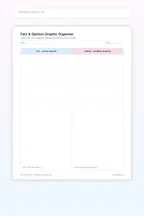
Fact and Opinion Graphic Organizer
A two-column organizer that goes beyond the shortcut ‘facts are true and opinions are false.’ The layout asks learners to classify statements and think about how a factual claim could be verified or what language signals a judgment. That makes the printable useful for real texts where opinions may contain facts and factual claims still need checking.

Free printable
Beginning, Middle, and End Graphic Organizer
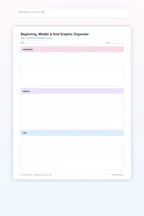
A three-part story structure page with enough room to write or sketch the most important events in each stage. It is deliberately simpler than a full story map or five-step sequence organizer, making it especially useful when the goal is basic retelling, summarizing, or planning a short narrative without overwhelming the learner with too many boxes.

Free printable
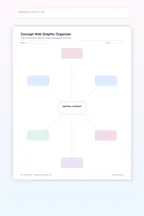
Concept Web Graphic Organizer
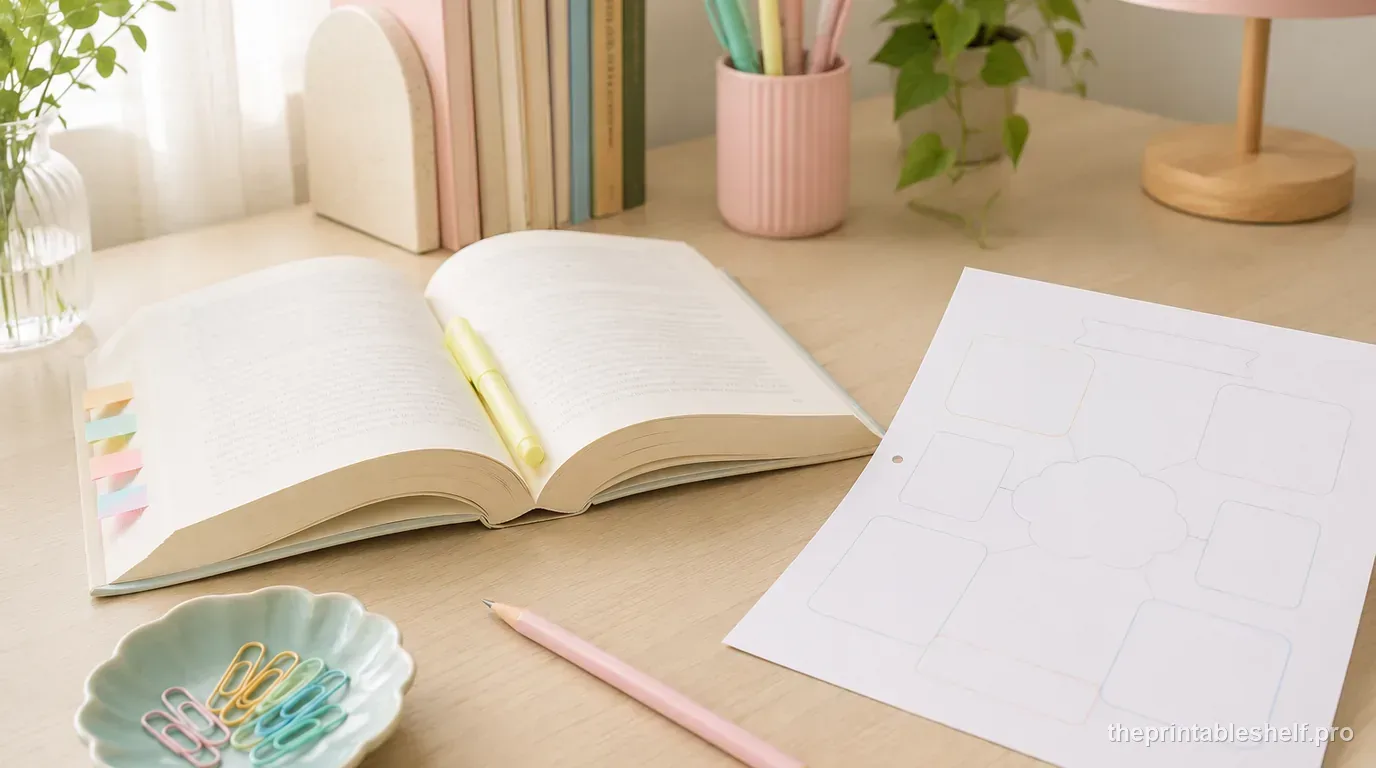
A radial organizer with one central concept and multiple surrounding branches. Unlike a main-idea-and-details sheet, the surrounding ideas do not all have to function as evidence for one sentence. The web is better for exploring a topic broadly, grouping associations, and making relationships visible before the user decides how the information should be ordered.

Free printable
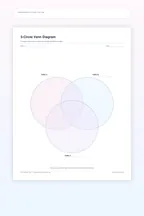
Printable 3-Circle Venn Diagram
A three-set comparison organizer with seven meaningful regions: three outer-only areas, three pairwise overlaps, and one center shared by all three topics. It is more demanding than a standard two-circle Venn, so the layout is intended for concise notes and relationships rather than paragraph-length writing. The page also leaves room to label all three topics clearly before the comparison begins.

Free printable
Plot Diagram Graphic Organizer
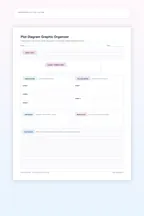
A plot-structure organizer for examining how a story develops around conflict and a meaningful turning point. It is more specific than a general story map: instead of collecting characters, setting, problem, and solution as separate story elements, this page asks the learner to sort significant events into exposition, rising action, climax, falling action, and resolution. The final plot-check prompt keeps the diagram focused on why the turning point matters rather than on the visual shape of a mountain.

Free printable
Inference Graphic Organizer
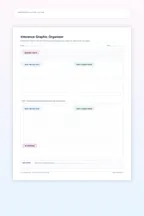
A reading-comprehension scaffold for conclusions that are implied rather than stated directly. The layout separates what the text actually provides from what the reader already knows, then asks for an inference supported by both. That distinction matters because an inference is not a guess or personal opinion; it should be a conclusion that remains accountable to textual clues and can be revised when new information changes the evidence.

Free printable
Text Evidence Graphic Organizer
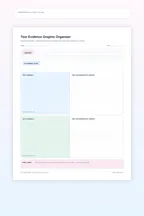
A compact evidence-to-explanation organizer for reading responses and source-based writing. The page deliberately separates evidence from the explanation of evidence. That separation helps expose a common gap: a learner may copy a strong quotation or detail but never show why it supports the point being made. The organizer can be used with direct quotations, paraphrased details, page or paragraph references, and other text-specific evidence allowed by the assignment.

Free printable
Summary Graphic Organizer
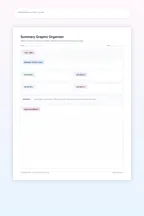
A reading-to-writing scaffold for compressing a text around its most important ideas. The page combines a main-idea box, a small set of key-detail slots, a deliberate 'leave out' check, and a final writing area. It is especially useful when learners can locate details but struggle to rank their importance. Unlike a beginning-middle-end retell, this organizer does not require every event to appear and can be used with nonfiction as well as narrative texts.

Free printable
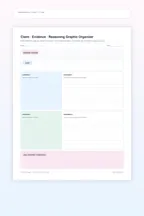
Claim Evidence Reasoning Graphic Organizer
A CER planning page for constructing evidence-based explanations, especially in science. The organizer keeps claim, evidence, and reasoning visually separate because they do different jobs: the claim answers the question, evidence provides appropriate observations or data, and reasoning links that evidence to the claim using relevant scientific ideas or principles. The layout can also support other evidence-based explanations when the teacher or assignment uses CER language.

Free printable
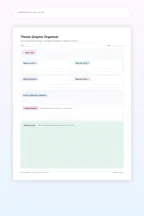
Theme Graphic Organizer Printable
A one-page reading organizer for determining theme in fiction or literary nonfiction. The layout deliberately delays the theme statement until after the reader has gathered repeated choices, conflicts, consequences, or changes from the text. That sequence makes it harder to guess a broad topic first and then hunt for details that merely sound related.
Free printable
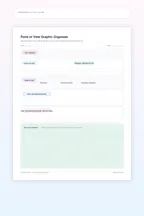
Point of View Graphic Organizer Printable
A reading organizer that treats point of view as more than spotting pronouns. Readers first identify the narrator and clues, then consider access to characters' thoughts and information before choosing a point-of-view category. A final evidence box requires a defensible reason for the choice.

Free printable
Context Clues Graphic Organizer Printable
A vocabulary-in-context worksheet built around a simple evidence process rather than guessing from one nearby word. Readers gather clues from the sentence and surrounding text, propose a meaning, test it in the sentence, and use a reference source when the context does not provide enough information.

Free printable
Compare Two Texts Graphic Organizer
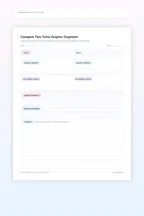
A source-comparison organizer designed for two articles, passages, accounts, or other texts about a related topic. Unlike a simple Venn diagram, it provides enough room to preserve each text's main idea and evidence before asking the reader to synthesize across sources.

Free printable
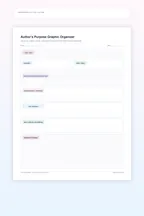
Author's Purpose Graphic Organizer
A reading organizer that goes beyond choosing one label from a PIE or PIEE acronym. It helps readers explain the author's goal in the specific text and connect that goal to audience, evidence, organization, examples, tone, or other deliberate choices.

Free printable
Informational Text Structure Graphic Organizer
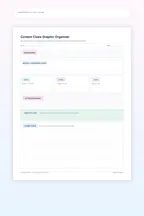
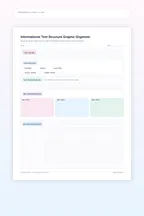
A nonfiction reading organizer for recognizing and using common expository text structures. The page includes signal-word clues but emphasizes relationships among ideas, because words such as first, because, or however can appear in passages without determining the structure of the whole section.

Free printable
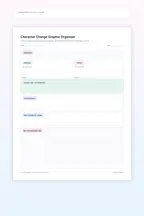
Character Change Graphic Organizer Printable
A literary-analysis organizer focused on development rather than a static list of traits. Readers compare a character's beliefs, goals, behavior, or traits across the story, connect the change to a turning point, and support the interpretation with text evidence.

Free printable
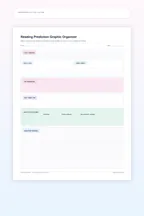
Reading Prediction Graphic Organizer
A before-and-during-reading organizer that treats prediction as evidence-based thinking rather than guessing. The page preserves the original prediction and then asks the learner to return to it after reading, which makes revision and metacognition part of the activity.
Use the templates well
Related guides

Free Reading Comprehension Graphic Organizers by Reading Skill
Free reading comprehension graphic organizers for story elements, main idea, sequence, cause and effect, comparison, vocabulary, and prior knowledge.
Read guide →
Cause and Effect vs. Sequence: How to Tell the Difference
Learn the difference between cause and effect and sequence, spot each text structure, and choose the right graphic organizer for reading or writing.
Read guide →
Main Idea vs. Summary: What's the Difference?
Learn the difference between main idea and summary, see worked examples, and use main idea plus key details to build a concise summary.
Read guide →
How to Use a KWL Chart Before, During, and After Reading
Learn how to use a KWL chart before, during, and after reading, with practical prompts, a worked example, and fixes for common KWL mistakes.
Read guide →
How to Use a Story Map for Better Reading Comprehension
Learn how to use a story map for characters, setting, problem, key events, and resolution, with a worked example and common fixes.
Read guide →
How to Use a Frayer Model for Vocabulary and Concepts
Learn how to use a Frayer Model with definitions, characteristics, examples, and non-examples, plus worked examples and common fixes.
Read guide →
How to Compare and Contrast Two Texts Without Just Making a List
Learn how to compare and contrast two texts by matching criteria, gathering evidence, using a Venn diagram, and turning notes into a clear response.
Read guide →
How to Find the Main Idea and Supporting Details in a Text
Learn how to find a text's main idea and supporting details with a step-by-step method, worked examples, and a free graphic organizer.
Read guide →
How to Teach Cause and Effect in Reading Without Teaching a Guessing Game
Teach cause and effect in reading with a practical routine for identifying real causal links, using evidence, and avoiding common student misconceptions.
Read guide →
How to Teach Sequence of Events in Reading Beyond First, Next, Then, Last
Teach sequence of events in reading with a step-by-step routine for choosing key events, using order clues, retelling, and avoiding overloaded timelines.
Read guide →
Frayer Model Examples and Non-Examples: How to Choose Ones That Actually Teach the Concept
Learn how to choose strong Frayer Model examples and non-examples, including near-misses, defining characteristics, and worked examples across subjects.
Read guide →
Story Map vs. Plot Diagram: Which Graphic Organizer Do You Need?
Compare story maps and plot diagrams, see what each organizer captures, and choose the right one for comprehension, retelling, or plot analysis.
Read guide →
7 Venn Diagram Mistakes That Make Compare-and-Contrast Work Weaker
Fix seven common Venn diagram mistakes, from mismatched criteria to vague overlap, and turn the organizer into stronger compare-and-contrast thinking.
Read guide →How to Make Inferences From Text Without Guessing
Learn how to make inferences from text using clues, relevant background knowledge, evidence checks, and a simple worked example for reading practice.
Read guide →How to Use Text Evidence in a Reading Response
Learn how to choose, cite, and explain text evidence in a reading response without quote dumping, with a worked example and free evidence organizer.
Read guide →How to Identify Theme in a Story Without Guessing
Learn how to identify theme from repeated details, character choices, conflict, and evidence—not a one-word topic—with a worked example and free organizer.
Read guide →How to Determine Point of View in a Story
Learn how to identify first person, third-person limited, and third-person omniscient point of view using narrator clues, knowledge limits, and evidence.
Read guide →How to Use Context Clues to Figure Out Word Meaning
Use context clues to infer an unfamiliar word, test the meaning in the sentence, and recognize when the text is too weak and a reference is needed.
Read guide →How to Identify Informational Text Structure
Learn how to identify description, sequence, cause/effect, compare/contrast, and problem/solution from idea relationships—not signal words alone.
Read guide →