Free Graphic Organizers & Printables for Grades 3–5
Free grades 3–5 reading and writing organizers for main idea, theme, inference, text evidence, context clues, comparison, summary, sequence, and planning.
Find 36 free graphic organizers for Grade 3, Grade 4, and Grade 5, arranged by the work a learner needs to do. Browse pages for stories, nonfiction, evidence, comparisons, cause and sequence, vocabulary, and writing, then choose one that fits the lesson. Teachers and families can use the sections to locate a page for reading, thinking, or planning a response.
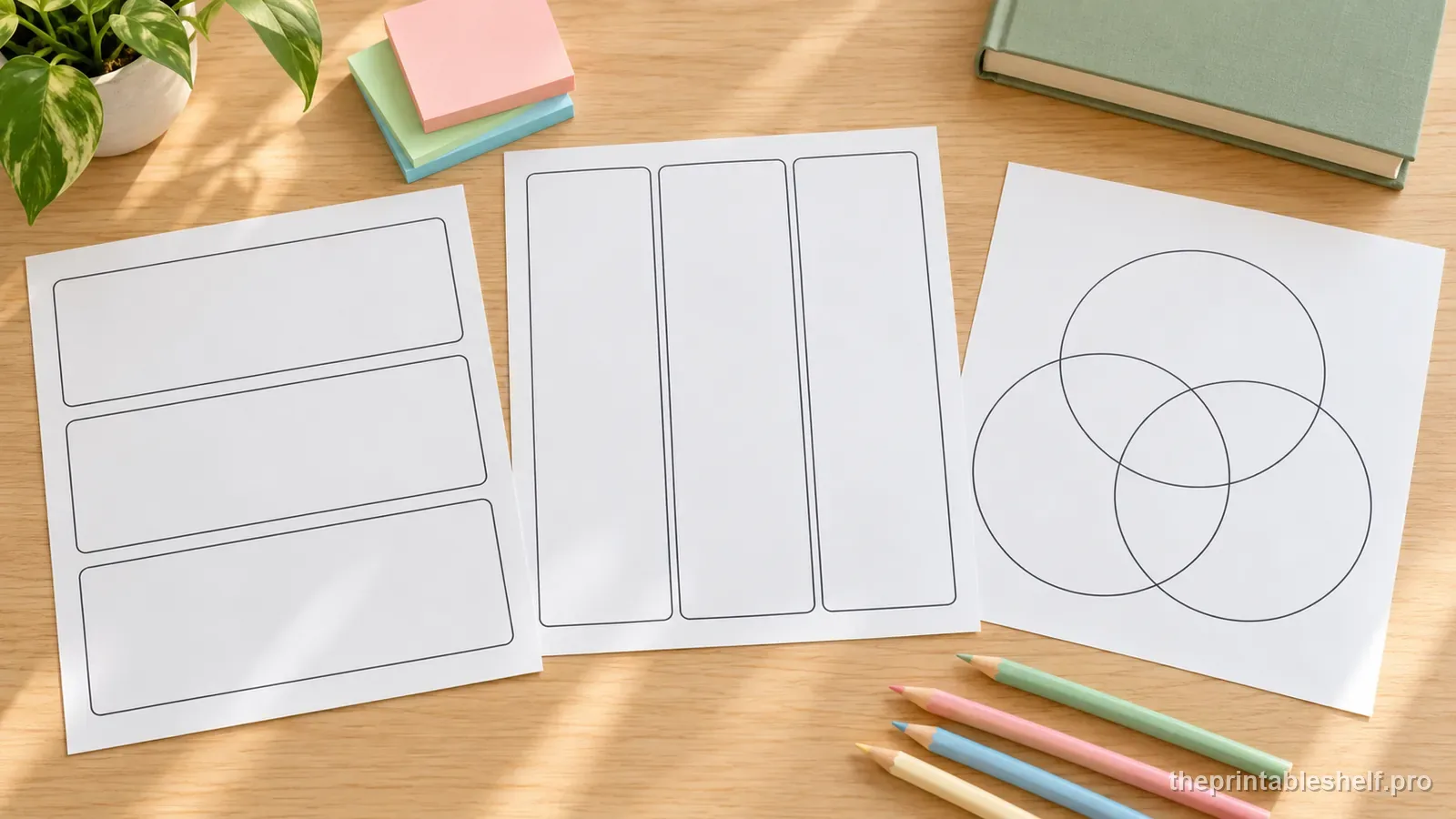
Start with the task chooser or scan the Three-box and three-part section below to compare pages with three clear sections. Every one of the 36 individual organizers is available as a US Letter PDF, an A4 PDF, and a high-resolution PNG; the 12-page pack comes as PDFs only. Many individual pages also include a completed example for 3rd grade learners and older elementary students.
A three-part organizer divides one page into three sections so learners can arrange a sequence, group information, or examine related ideas. The options below use different structures: choose by the task, whether it is retelling a story, comparing topics, tracking learning, or organizing supporting details.
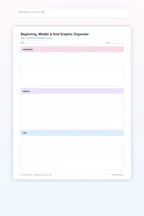
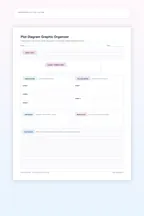
For a read-aloud retell, the three large event boxes carry the beginning, middle, and end, while separate spaces identify characters, setting, and the central problem.
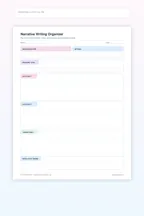
Need a simple sequence for a short narrative? This page gives each stage its own area for the key event, keeping the retell focused on the story's main movement.
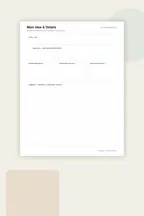
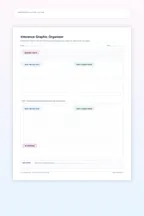
The three support spaces collect details for one main idea; pair them with the topic and summary areas when an elementary reader explains a science passage.
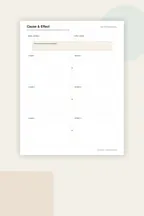
During a weather unit, learners can connect several causes with their effects in the paired rows, keeping each relationship tied to the event named above.
Which reasons support the position? The three reason areas each connect to an example or evidence, helping an older elementary writer prepare an opinion paragraph.
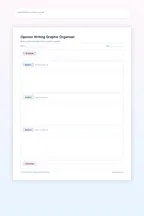
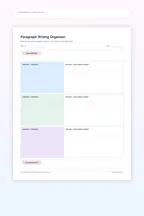
A paragraph plan starts with its topic sentence, develops three supporting ideas with explanation or evidence, and ends with a closing sentence that returns to the point.
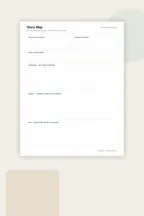
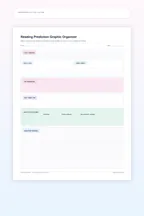
Use these pages after a picture book, short story, or class novel when children need to retell events or explain a literary idea. Choose a story map for key elements, a beginning-middle-end page for a brief retell, or a focused sheet for character, plot, theme, viewpoint, or a prediction.
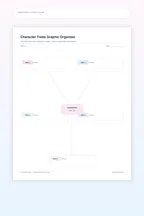
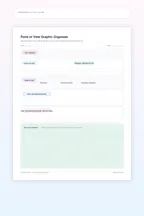
In a novel conversation, each character branch pairs a trait with evidence from actions, dialogue, thoughts, or choices, giving readers a reason for their description.
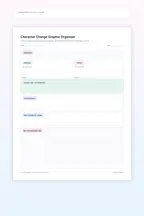
How does the main character change? Beginning and ending traits, a turning point, and evidence help readers support an interpretation of a class story.
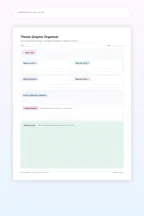
For a book response, gather repeated story details in the evidence areas, notice a pattern, then shape a theme statement and check it against the text.
Reading nonfiction: KWL, main idea, summary, and structure
Choose these pages for science passages, biographies, and social studies readings when the class needs to identify important information. Main idea and summary pages help select key points, while Five W's gathers event details and the purpose or structure pages examine how an author presents ideas.
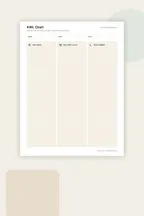
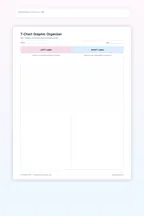
At the start of a science topic, learners note what they Know and Want to know; after the lesson, the Learned column captures new information or corrections.
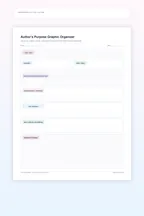
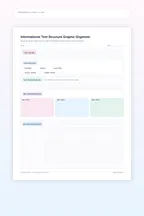
During nonfiction reading, learners check structure clues, map idea relationships, select evidence, and explain how the organization supports meaning in a science passage.
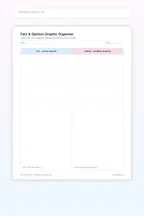
These organizers support reading responses, science explanations, and media lessons where an answer needs a reason. Pick text evidence to connect details with a claim, inference when an idea is implied, CER for a science explanation, or fact and opinion to examine statements.
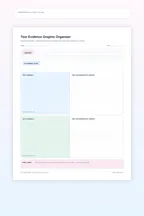
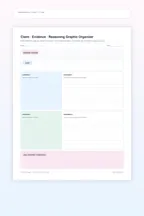
Which details support the response? A question, focused claim, two evidence-and-explanation pairs, and a relevance check help readers prepare a text-based answer.
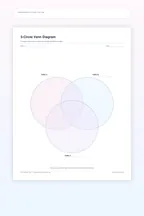
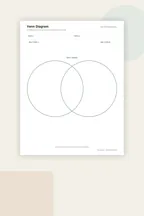
Use comparison pages in reading, science, or social studies when students need to notice what is shared and what differs. A Venn diagram shows overlaps, the three-circle version handles three topics, and the other organizers leave room for labeled categories or evidence from paired texts.
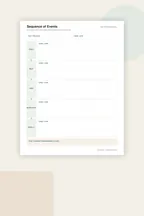
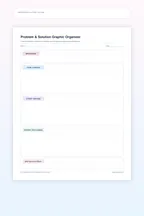
Select these pages for a process explanation, event retell, or reading response that depends on how one idea connects to another. Cause and effect follows linked relationships, a sequence page tracks ordered steps and change, and problem-solution shows how a response develops.
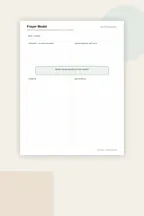
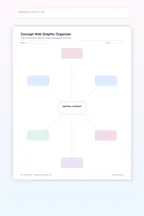
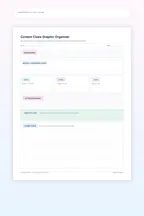
Bring these organizers into reading, science, or math when learners need to explain a new word or explore how ideas connect. The Frayer page distinguishes a concept from similar examples, a context-clues sheet follows evidence in a passage, and a concept web spreads related ideas around a topic.
While reading a nonfiction passage, learners collect sentence clues, predict an unfamiliar word's meaning, test it in context, then confirm or revise the idea.
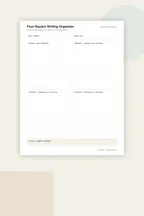
Use writing planners before a paragraph, explanation, opinion, story, or how-to draft. Choose a structure that matches the product: a focused paragraph plan for one idea, an opinion page for supported reasons, a story planner for events, or a process page for clear instructions.
A focused paragraph begins in the opening box, develops through three supporting points, and ends in the closing strip; use it before an opinion draft.
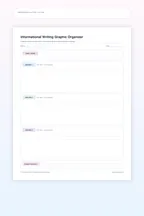
Which reasons strengthen the same position? Three reason areas with examples or evidence help an older elementary writer plan an opinion letter and conclusion.
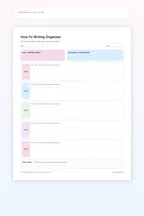
As writers prepare classroom directions, they name the goal and preparation, order the steps, add transition words, and check for assumptions a reader may miss.
After reading a class story, children start with the Beginning, Middle, and End Graphic Organizer to select one important event for each stage. They then check the Story Map to identify the characters, setting, and central problem alongside the story arc. With these notes, each child can write a short retell that follows the events and names the problem. A teacher or family member can model the first stage aloud, then invite learners to complete the remaining parts using details from the story.
In a science lesson, begin with the KWL Chart: learners record what they know about the topic and what they want to find out before the reading or instruction. After studying the material, they return to the Learned column. Next, the Claim Evidence Reasoning Graphic Organizer helps connect a claim to observations and explain why those observations support it. The final product can be a short written science explanation. Modeling one response with the class gives children a clear way to distinguish an observation from the idea it supports.
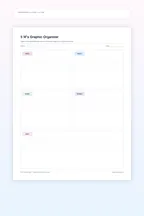
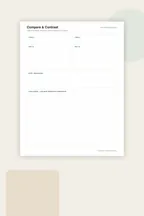
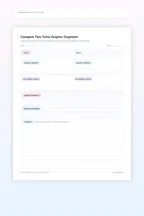
For a social studies reading, learners use the Compare Two Texts Graphic Organizer to keep each account's main idea and evidence together. They then mark a shared point and a difference, followed by a note about what the accounts reveal together. Before drafting, the Five W's Graphic Organizer can help collect who, what, when, where, and why details from an event source. Those notes support a short comparison paragraph that explains what the accounts share and how their details differ, using information found in the readings.
A 3 box graphic organizer is a page divided into three parts so learners can sort information into a clear sequence or set of ideas. The Story Map uses beginning, middle, and end; the Beginning, Middle, and End organizer focuses on those stages; and the KWL Chart tracks what learners know, want to know, and learn. Choose the structure that fits the assignment.
Which graphic organizers work best for grades 3, 4, and 5?
Choose by the thinking or writing task. A Story Map can help plan a retell, Main Idea and Details can gather support for a nonfiction point, and a Venn Diagram can compare two topics. For a science explanation, consider Claim Evidence Reasoning; for an opinion paragraph, use a planner that connects a position with reasons. The assignment determines which structure fits.
What are the three types of graphic organizer?
There is no official set of exactly three organizer types; sources divide them in different ways. This page arranges printables into seven task groups: literature, informational reading, evidence and opinion, comparison, cause and sequence, vocabulary, and writing. A separate Three-box and three-part section points to pages with a three-part structure. Choose a group based on the classroom task.
Are these graphic organizers free to download as PDFs?
Yes. The printables are free, and no sign-up is required. Each of the 36 individual organizers has a US Letter PDF, an A4 PDF, and a high-resolution PNG. The separate 12-page pack comes only as a US Letter PDF and an A4 PDF, with no PNG. Open an individual printable or the pack page to select its available file.
Do the graphic organizers include completed examples?
Yes. 17 of the 37 printables on this page have a completed example, including the Story Map, KWL Chart, Main Idea and Details, and Summary organizers. Availability depends on the individual page. Look for the section called “Completed example” on the page for the printable you want to use.
Which graphic organizer helps with main idea and summary?
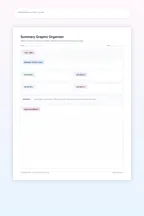
The Main Idea and Details organizer gives readers a place to state the main point and gather supporting details before writing a summary. The Summary organizer helps select key details, consider what can be left out, and write a shorter version. Either can support a nonfiction reading task, depending on whether learners are gathering support or condensing the whole passage.
How do I help students in grades 3–5 get started with a graphic organizer?
Model one section aloud using a short passage or familiar topic, then invite learners to try the next part with you. Talk through why a detail belongs in a box, column, or circle. Let students work one section at a time, and use a completed example to show how notes can lead to a response when that page includes one.