How-to guide · Work & Study
How to Teach Sequence of Events in Reading Beyond First, Next, Then, Last
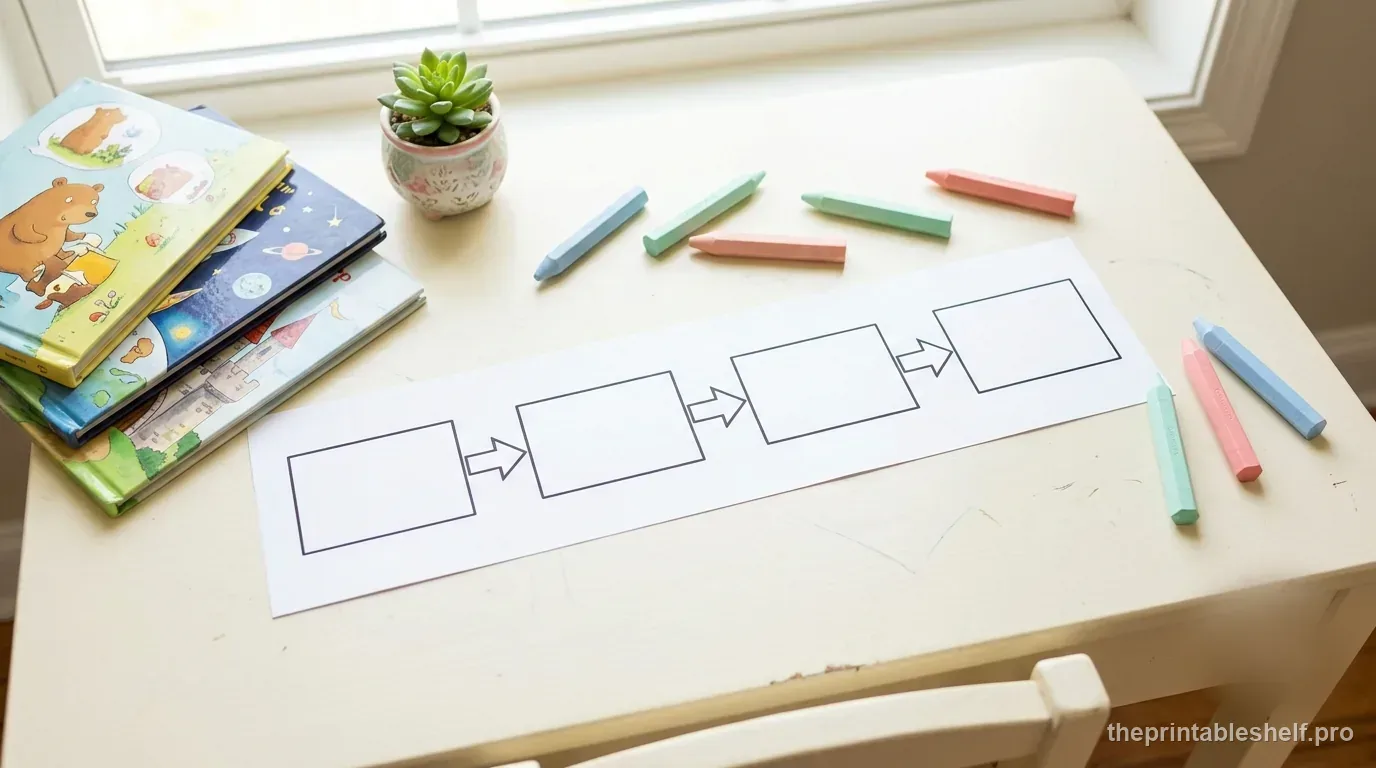
Students can often chant first, next, then, last long before they can build a useful sequence from a real passage. The hard part is not knowing four transition words. It is deciding which events belong, recognizing clues that fix the order, and understanding when the order is essential to meaning. A sequence organizer becomes valuable only after those decisions are made.
The lesson routine below works with stories, historical accounts, life cycles, biographies, and procedural text. It also separates sequence from two nearby skills that are easy to confuse with it: summarizing everything that happened and explaining cause and effect. The goal is a sequence that preserves the structure of the text without becoming a transcript.
Define sequencing as an order relationship
A sequence is a set of events, ideas, or steps arranged in a meaningful order. Sometimes the order is chronological: a character arrives, discovers a problem, makes a choice, and faces a consequence. Sometimes it is procedural: one step has to happen before another can begin. Reading Rockets describes chronology or sequence as a structure that presents items or events in order or explains steps to follow.
That definition is more useful than simply telling students to look for first and next. A passage can be sequential without those words, and a sentence can contain before or after without being one of the key events worth recording. Teach students to ask two questions: What are the units I am ordering, and what makes this order meaningful?
Start with moveable events before a blank worksheet
Give students a small set of short event cards from a familiar story or process and mix them up. Ask them to put the cards in order and justify one placement. Physical movement makes the decision visible: if two cards can switch places without changing the meaning, the relationship may be less fixed than it first appears. If one event depends on another, students should be able to say what clue supports that dependency.
Only after the order makes sense should students transfer the events to a sequence page. This avoids a common worksheet habit in which learners write the first sentence of a paragraph into box one, the second sentence into box two, and so on. The boxes should contain selected events or steps, not sentence positions.
Teach four kinds of clues that establish order
Time words are the most obvious clues: first, later, the next morning, after, before, eventually. Dates and ages can do the same job in biographies and history. Procedural dependencies are another clue: you cannot bake the mixture before combining the ingredients. Causal dependencies may also constrain order: a door cannot be repaired until the damage occurs. Finally, narrative logic can establish order when a character learns information in one scene and acts on it in a later scene.
Have students label why they placed one event before another. A tiny note such as time word, date, must happen first, or character learns this here is more revealing than a perfectly filled sequence sheet with no explanation.
| Order clue | What it tells the reader | Example |
|---|---|---|
| Time word or date | Where events fall on a timeline | The next morning; in 1912; three weeks later |
| Procedural dependency | A step must be completed before another step | Measure before cutting |
| Causal dependency | One event creates the condition for a later event | The alarm sounds before the building is evacuated |
| Narrative logic | New knowledge or a decision changes what can happen next | The character reads the letter before confronting the sender |
Teach students to choose key events, not every event
A sequence organizer usually has limited space for a reason. Its job is to expose the backbone of a process or text. Ask of each candidate event: If I remove this, does the reader lose an important stage or become confused about what happens next? Details that add description but do not change the progression can stay out of the organizer.
For stories, another useful test is consequence. What is different after this event? If nothing important changes, the event may not deserve space on the organizer. For procedures, ask whether skipping the step would make the process fail or leave out a necessary phase. These tests keep the organizer from becoming an exhausting list.
Separate sequence from summary
A sequence preserves order; a summary preserves the most important meaning. The two often overlap, but they are not identical. A sequence of a chapter might record five turning points in order. A summary may combine two of those events into one sentence, omit another, and emphasize the central conflict instead. Do not mark a sequence wrong simply because it does not sound like a polished summary.
A useful classroom progression is sequence first, oral retell second, summary third. After students arrange the event backbone, ask them to retell it without looking at the original passage. Then ask what can be compressed when the purpose changes from reconstructing order to explaining the text briefly.
Separate sequence from cause and effect
Events can be correctly ordered without one causing the next. A student wakes up, eats breakfast, takes a bus, attends class, and later goes to soccer practice. Those events form a sequence. They are not automatically a causal chain. By contrast, forgetting to set an alarm may cause the student to wake late, which may contribute to missing the bus.
When students start drawing causal arrows between every pair of boxes, stop and ask whether the current goal is order or explanation. The site has a separate cause-and-effect organizer for relationships in which why and result matter more than simple chronology.
A worked example: sequence a process without copying it
Imagine a paragraph explaining how a seed germinates. It describes a seed absorbing water, the seed coat softening, the embryo resuming growth, the first root emerging, and a shoot growing upward. It also includes descriptive facts about stored food and temperature. A weak sequence copies four sentences in the order they appear. A stronger sequence records the stages: seed absorbs water → coat softens and growth resumes → root emerges → shoot grows upward.
The stronger version compresses related information and leaves out facts that explain conditions without becoming stages. Students can still discuss those supporting details after the sequence is clear. The organizer is not meant to contain every useful fact; it is meant to show the progression at a glance.
Adapt the routine for fiction, history, and procedures
For fiction, focus on turning points rather than every scene. For history, combine dates with causal discussion so students do not confuse a timeline with an explanation of why events occurred. For procedures, emphasize dependencies: which step must happen first, which steps can occur in parallel, and which final step confirms completion. For a life cycle, encourage students to notice whether the process is actually cyclical rather than a one-way line.
You can also vary the response mode. Younger students may draw each stage and add one label. Older students can write a brief event plus a clue that fixes the order. The thinking target stays the same even when the amount of writing changes.
Common sequencing mistakes and how to fix them
Mistake one is copying the first four sentences. Fix it by identifying the event units before looking at sentence order. Mistake two is recording too many minor actions. Fix it with the removal test: would the progression still make sense without this detail? Mistake three is relying only on transition words. Fix it by teaching dates, dependencies, and narrative logic as additional order clues.
Mistake four is turning every sequence into cause and effect. Fix it by asking whether the relationship is about when or why. Mistake five is stopping after the boxes are full. Ask students to retell the sequence aloud or write one short synthesis sentence. ReadWriteThink's sequencing lesson similarly extends ordered-event work into reflection on how sequence supports comprehension rather than treating the chart as the end of the task.
A reusable sequencing lesson
Begin by ordering familiar cards and justifying the placements that matter to the sequence. Then model a short text and name the clues that fix important events in place. Have students complete a small organizer independently or with a partner, and finish with a retell plus a comparison question: Which event could be removed without breaking the sequence, and which could not? Adjust the time spent on each phase to the text and the learners rather than treating the routine as a fixed schedule.
On later lessons, increase complexity rather than simply adding more boxes. Remove obvious signal words, use a passage with a flashback, ask students to sequence a historical process from several paragraphs, or give them one irrelevant detail that should not be included. Those changes strengthen the reasoning skill without turning the page into a longer worksheet.
Frequently asked questions
What are some sequencing activities for kids?
Cut a short story into event strips and have children put them in order and retell them aloud. Use a five-step organizer for a recipe or science process, draw three or four panels for a story, or act out events and have a partner name what happened first, next, and last. Ask them to explain why one event had to come before another.
What are common sequence words?
Common sequence words include first, next, then, after that, finally, before, during, later, and meanwhile. They help readers follow order, but they can be missing from a text, so students should also look for the logic of what must happen before what. A date or a step number can show order just as well as a signal word.
What is the difference between sequencing and summarizing?
Sequencing focuses on the order of events or steps. Summarizing focuses on the most important meaning and may combine or omit events even when they were part of the full sequence.
Should students always use first, next, then, and last?
No. Those words are helpful for beginners, but real texts also signal order through dates, time phrases, procedural dependencies, causal dependencies, and narrative logic.
How many events should go on a sequence organizer?
Use enough events to preserve the important progression without copying the entire text. The right number depends on the process or narrative, so keep only the stages a reader needs to reconstruct the meaningful order.
Printables for this topic
Free Sequence of Events Graphic Organizer →
This sequence of events organizer gives you five ordered steps labeled First, Next, Then, After That, and Finally, plus a final reflection on what changed. Use it to retell a story, track historical events, explain a process, or plan a procedure. Download the printable in Letter, A4, or PNG.
Free Printable Story Map Template →
This free story map printable gives students space for characters, setting, the central problem, and a beginning-middle-end story arc. Use it to plan original writing or map a story after reading. Separate Letter, A4, and PNG downloads make it easy to use at home, in class, or in a binder.
Free Cause and Effect Graphic Organizer →
Use this cause and effect graphic organizer to connect why something happened with what happened as a result. The page includes a focus event plus three clearly paired cause-and-effect rows, making it useful for reading, science, history, and process analysis. Download it in Letter, A4, or PNG format.
References
These sources support the instructional background in this guide. The printable recommendations and usage notes above are The Printable Shelf's editorial guidance.
- Reading Rockets — Teaching Text Structure — Defines chronology/sequence as ordered events or steps and provides signal words and questions used to identify the structure.
- ReadWriteThink — Sequence of Events Chart — Instructional guidance for using a sequence chart with stories, processes, reactions, cause/effect relationships, and scaffolding.
- ReadWriteThink — Sequencing: A Strategy to Succeed at Reading Comprehension — Lesson plan that has students identify events, arrange them into order, and reflect on sequencing as a comprehension strategy.
- Iowa Reading Research Center — Reading Graphic Organizers — University literacy resource collection showing organizer use across comprehension skills and text relationships.
Keep reading
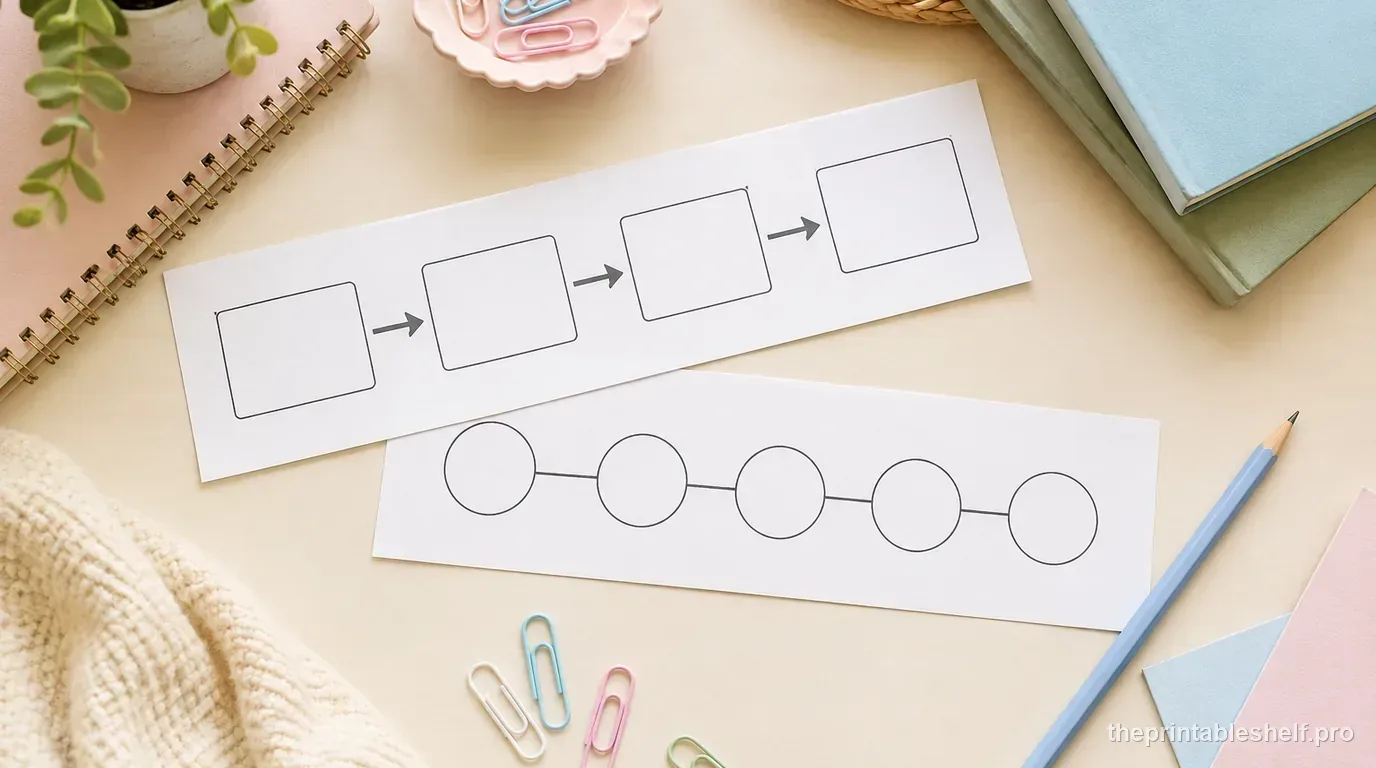
Cause and Effect vs. Sequence: How to Tell the Difference
Learn the difference between cause and effect and sequence, spot each text structure, and choose the right graphic organizer for reading or writing.
Read guide →
Free Reading Comprehension Graphic Organizers by Reading Skill
Free reading comprehension graphic organizers for story elements, main idea, sequence, cause and effect, comparison, vocabulary, and prior knowledge.
Read guide →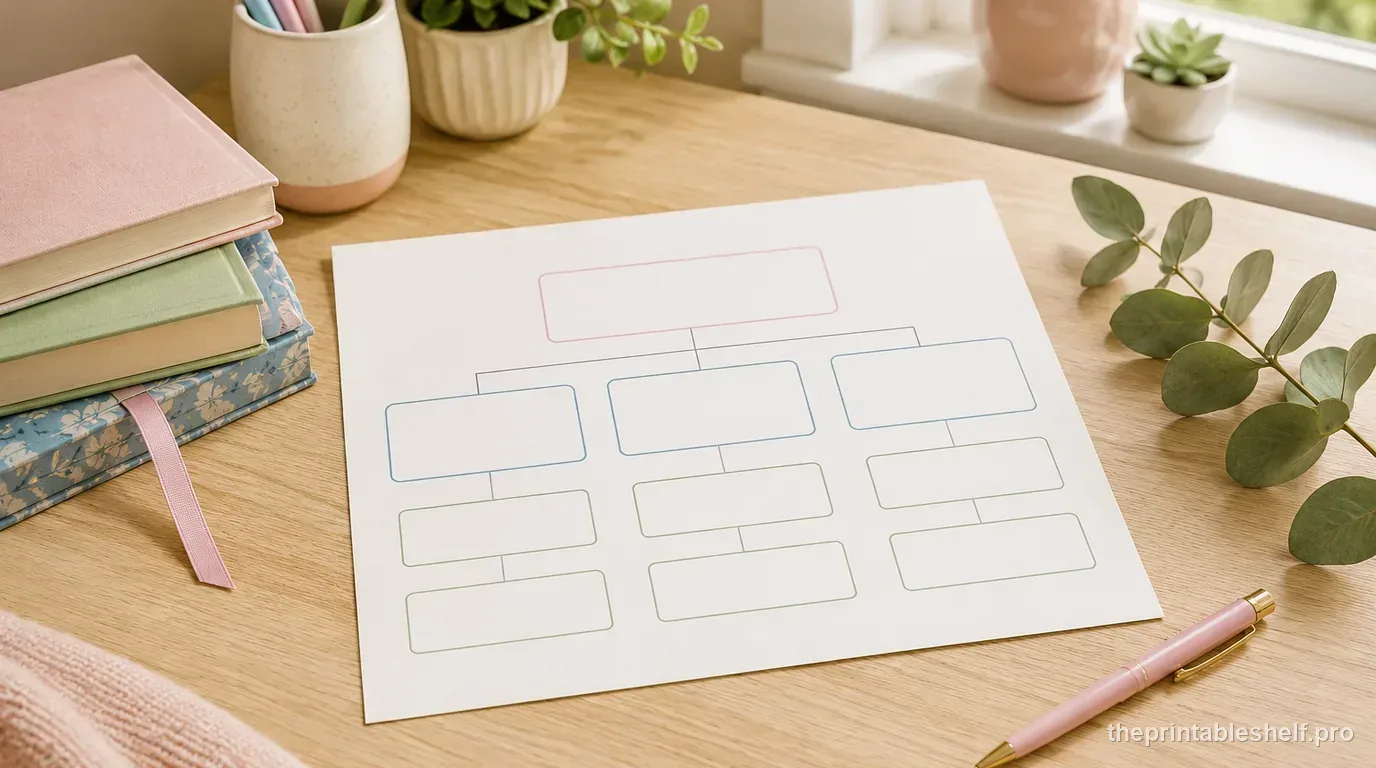
How to Use a Story Map for Better Reading Comprehension
Learn how to use a story map for characters, setting, problem, key events, and resolution, with a worked example and common fixes.
Read guide →