The Printable ShelfFree pack

Suggested grade band · 9–12

Free Graphic Organizers for High School (Grades 9–12 PDFs)

Free high school graphic organizer templates and worksheets as PDF and PNG: Cornell notes, text evidence, CER, essay outline, research notes, plot diagram, and Frayer model.

High school learners in Grade 9, Grade 10, Grade 11, and Grade 12 can choose from ten individual graphic organizers and a 12-page pack, organized around notes, evidence, essays, and concepts. This worksheet hub explains what each page helps with and how to match a layout to the next reading, research, or writing task.

Use the chooser to narrow the task, then compare the examples in the by subject section below. All ten individual organizers include US Letter PDF, A4 PDF, and high-resolution PNG downloads; the 12-page pack is offered in PDF formats only. Check each organizer description before choosing a file for the assignment.

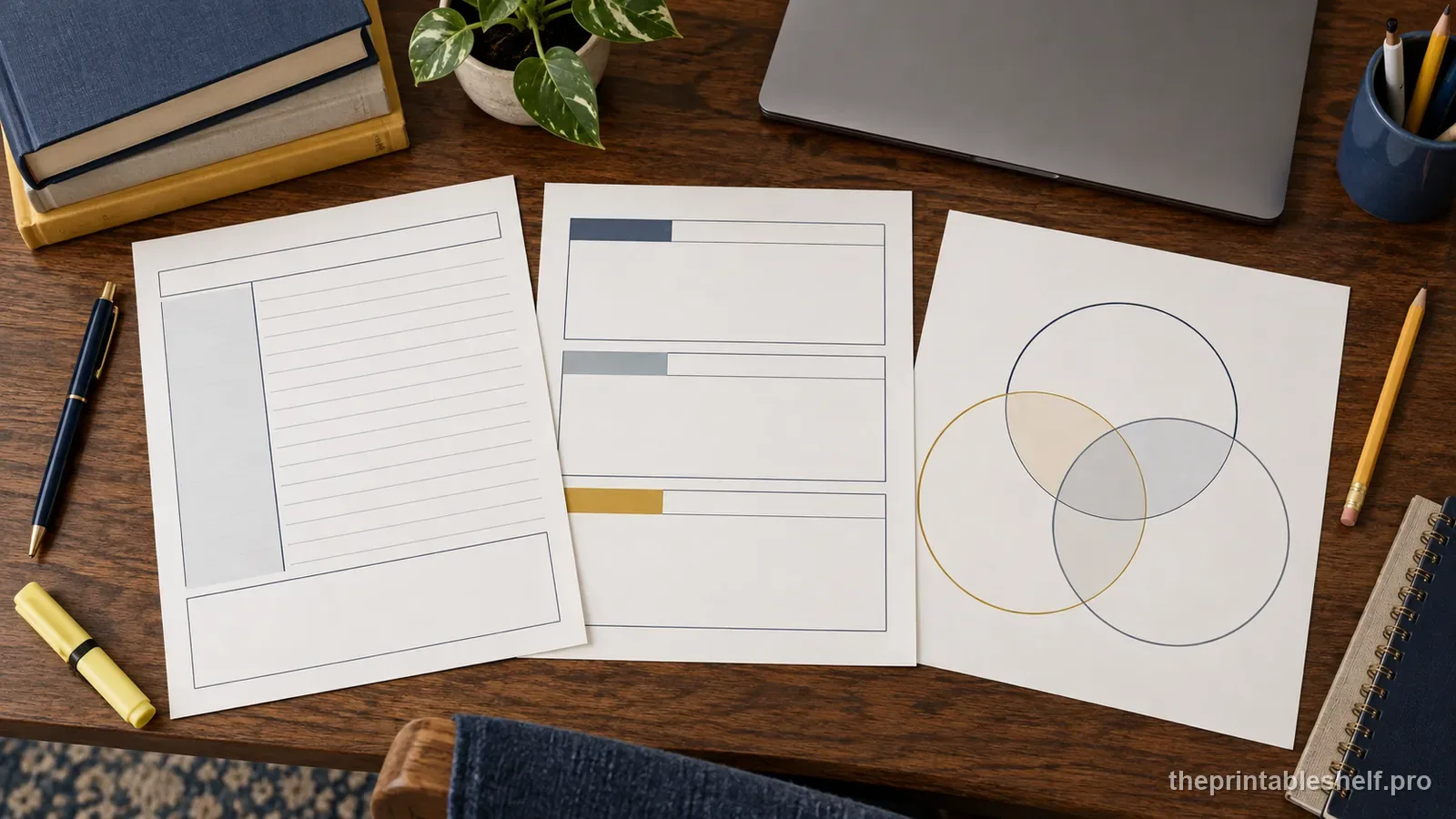
Blank Cornell, claim-evidence-reasoning, and three-circle organizer pages with books and study supplies on a library desk.

Which organizer should I use?

Graphic organizers by subject: English, science, history, and any class

For high school English, text evidence can support reading responses, while a plot diagram focuses on a story's turning point. In science, CER separates an explanation's parts, and Frayer vocabulary work also applies across reading, science, social studies, and math. Cornell notes suit classes across subjects; choose each page by the work at hand.

Notes and research: Cornell, KWL, and source notes

Class notes and research projects call for different ways to capture information before writing or review. Choose Cornell notes to pair lecture details with cues and a recap, KWL to surface questions before learning, or source notes to keep a researcher's words and source details connected.

Evidence-based reading and science explanations

Close reading and scientific explanations both depend on showing how details support an idea. Use the text-evidence page to develop a reading response from a claim and passages, or choose CER when an assignment asks for an evidence-based explanation, especially in science.

Essays and literature

Essay planning starts by identifying the central point and the support a writer will develop. The outline helps arrange body ideas for an academic essay, while a plot diagram is suited to stories when a reader needs to track conflict and explain a consequential turn.

Vocabulary, concepts, and three-way comparison

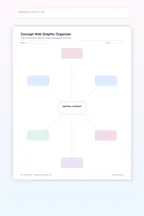
Concept work across subjects may mean clarifying a new term, mapping related ideas, or comparing three topics. Pick the Frayer page to examine a word's boundaries, a concept web to explore connections before ordering ideas, or a three-circle Venn diagram when overlaps matter.

Three ways organizers show up in Grades 9–12

English language arts · Grade 9

Build a text-based interpretation

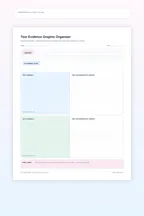
For a high school English reading response, students begin with the Text Evidence Graphic Organizer and state the question and a focused claim. They select relevant details, explain how each supports the point, and use the final check to review the connection before drafting. If the class is discussing a story, the Plot Diagram can help trace meaningful events and consider why a turning point redirects the conflict. Students then shape those notes into a concise written interpretation or bring the claim and support to discussion.

Text Evidence Graphic OrganizerPlot Diagram Graphic Organizer

Science · Grade 10

Explain evidence from an investigation

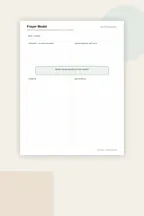
In a science assignment, students can use the Claim Evidence Reasoning Graphic Organizer to answer the question, record observations or data, and explain the scientific idea that connects them to the claim. The separate sections make the role of each part visible while students prepare an evidence-based explanation. When the task introduces an unfamiliar term, the Frayer Model helps them define it, note its characteristics, and distinguish examples from non-examples. The resulting notes can guide a lab explanation and a clear account of the vocabulary used.

Claim Evidence Reasoning (CER) Graphic Organizer PDFPrintable Frayer Model Vocabulary Template

Social studies · Grades 11–12

Keep research notes tied to sources

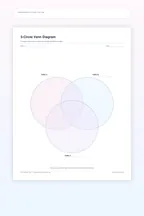
For a social studies research project, begin with the Research Notes and Source Organizer, giving each source its own page so identifying details remain beside quotations, paraphrases, and page or section locations. Students can mark where each captured idea may fit within the inquiry before drafting. In a senior-year synthesis, compare what the sources agree on and where their accounts differ, then return to the cited locations before combining those ideas in a claim. Cornell Notes can capture ideas from a related class lecture or reading, with cue questions and a bottom summary supporting later review. If comparing three accounts or systems, a Three-Circle Venn Diagram can sort concise traits in unique and shared regions before a source-based essay.

Research Notes and Source Organizer PrintablePrintable Cornell Notes TemplatePrintable 3-Circle Venn Diagram

Frequently asked questions

What are graphic organizers for high school students?

A graphic organizer for high school is a planning page that makes relationships among ideas visible before a student writes, discusses, or reviews them. Cornell notes arrange cues beside class notes, a text-evidence page connects details to a claim, and a concept web branches from a central topic. Choose the layout that matches the thinking the assignment asks for.

Which graphic organizers work best for high school English and science?

For an English reading response, the Text Evidence organizer links textual details to a claim; a Plot Diagram helps examine a story's conflict and turning point. In science, the Claim Evidence Reasoning page separates an answer, supporting observations or data, and the explanation between them. A Frayer Model can also help clarify vocabulary in reading or science.

How many types of graphic organizers are there?

There is no official number of organizer types, and sources divide them in different ways. This page groups its choices into four task areas: notes and research, evidence-based reading and science explanations, essays and literature, and vocabulary, concepts, and three-way comparison. A separate by-subject section helps readers consider examples across English, science, history, and other classes.

Are these graphic organizers free to download as PDFs?

Yes. The ten individual organizers are free to download without signing up, and each has a US Letter PDF, an A4 PDF, and a high-resolution PNG. The separate 12-page pack is available as US Letter and A4 PDFs only; it does not include PNG files. Open the page for a specific organizer to choose its download format.

Do the graphic organizers include completed examples?

Yes. 7 of the 11 resources have a completed example, including Cornell Notes, the KWL Chart, Frayer Model, Text Evidence organizer, CER organizer, Essay Outline, and Research Notes and Source Organizer. Availability varies by page. Look for the “Completed example” section on the page for the printable you plan to use.

Which graphic organizer helps with note taking and research?

Cornell Notes can organize class, lecture, reading, or self-study notes with cues, a main notes area, and a summary. The Research Notes and Source Organizer keeps source details, paraphrases, quotations, and page locations connected to notes for a research question. It supports note taking, but it does not create citations automatically; follow the citation style required for the assignment.

How can high school students use a graphic organizer without just filling in boxes?

Ask a question for each section before writing in it: what detail matters, how does it support the point, or what relationship should be visible? Compare your thinking with a completed example when the page has one, then use the organizer to plan a draft or discussion. Afterward, revisit any check or summary section the page provides and revise notes that do not serve the task.
Explore another grade band