Suggested grade band · K–2
Free Graphic Organizers & Printables for K–2
Free K–2 printable organizers for story sequence, beginning-middle-end, basic comparison, prediction, 5 W's, writing, and early study routines.
In kindergarten through grade 2, the organizer should make the thinking visible without creating a second reading task. Pages with a small number of clearly separated sections usually work better than dense note-taking layouts, especially when students are still building handwriting stamina and learning how to explain their thinking aloud.
The resources on this page are suggestions rather than strict grade assignments. A first grader may use a sequence organizer with teacher modeling, while a second grader may be ready to use the same page independently. Text difficulty, writing demands, and the amount of support matter more than the grade label printed on a lesson plan.
12 suggested resources
Printables for K–2

Free printable
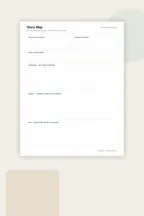
Printable Story Map Template
A one-page story organizer that separates the pieces students often mix together. Characters and setting establish who and where, the problem gives the story something to resolve, and three larger boxes organize the sequence into beginning, middle, and end. It works for reading response or prewriting.

Free printable
Printable Venn Diagram Template
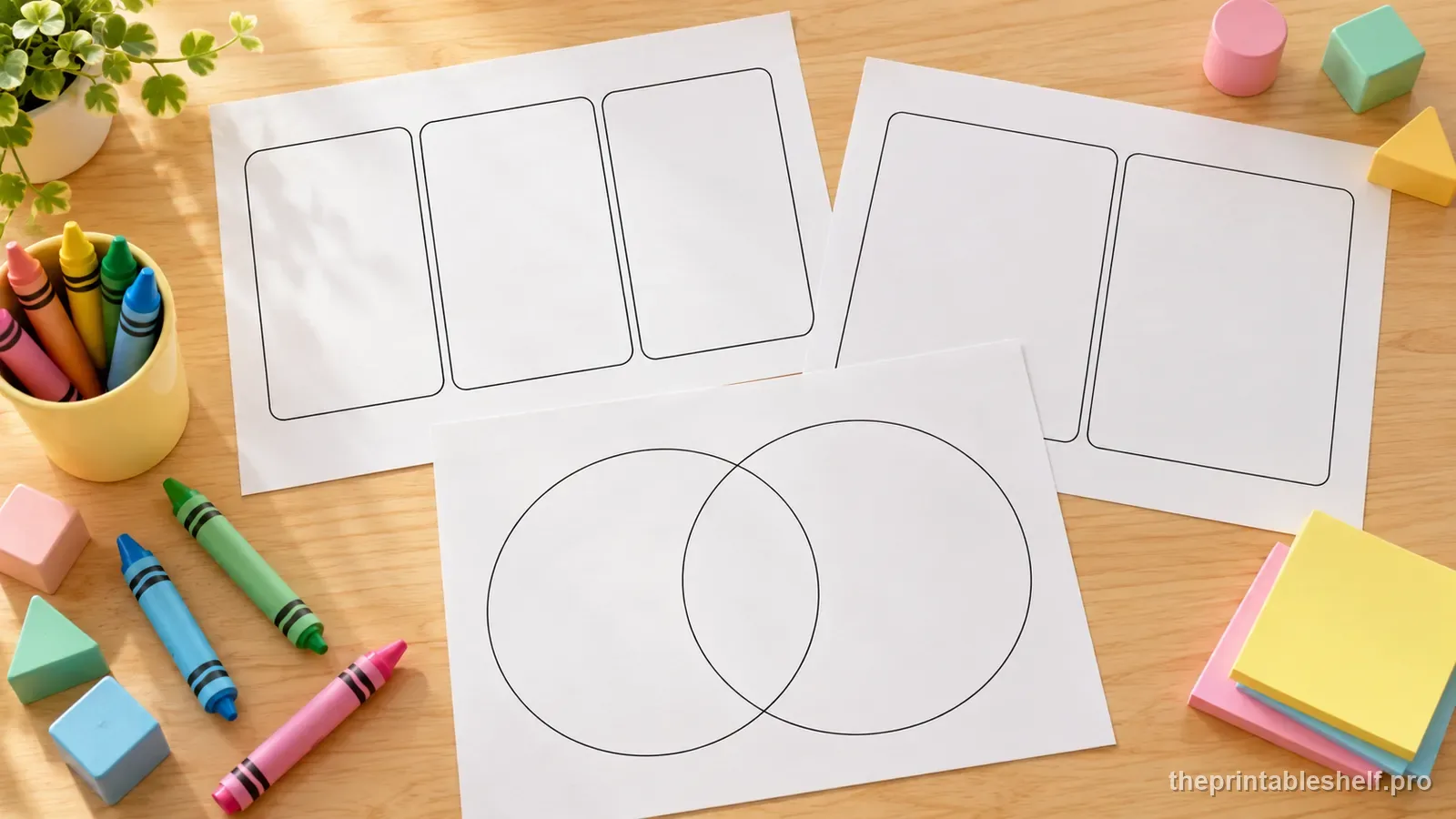
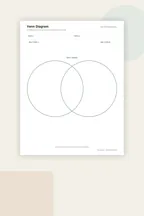
A clean two-circle comparison organizer with dedicated topic fields, generous writing space, and light writing guides. The page is intentionally simple so the visual relationship does the teaching: differences stay on the outside, while anything true of both topics belongs in the middle overlap.

Free printable
Sequence of Events Graphic Organizer
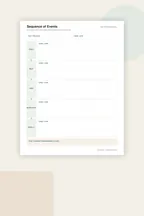
A vertical sequence chain that makes order visible without squeezing each event into tiny boxes. Five linked writing areas support short event summaries or process steps, and a final reflection box pushes the learner to notice the overall change from beginning to end rather than merely copying chronology.

Free printable
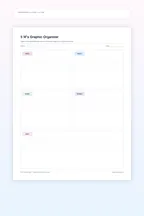
5 W's Graphic Organizer Printable
A five-part fact and comprehension organizer with one clear writing area for each of the classic 5 W questions. The structure is simple enough for elementary reading work but flexible enough for research notes, current-events summaries, biographies, interviews, and prewriting when a topic needs basic context before deeper analysis.

Free printable
Printable T-Chart Graphic Organizer
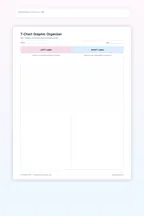
A clean two-column thinking sheet that can be relabeled for dozens of school, study, and planning tasks. Unlike a compare-and-contrast organizer with fixed prompts, a T-chart stays intentionally open: the user decides what the two sides mean, which makes it useful for classification, decision-making, text evidence, observation, and quick note sorting.

Free printable
Fact and Opinion Graphic Organizer
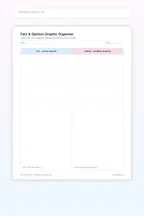
A two-column organizer that goes beyond the shortcut ‘facts are true and opinions are false.’ The layout asks learners to classify statements and think about how a factual claim could be verified or what language signals a judgment. That makes the printable useful for real texts where opinions may contain facts and factual claims still need checking.

Free printable
Beginning, Middle, and End Graphic Organizer
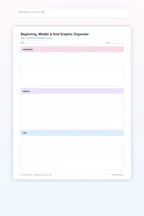
A three-part story structure page with enough room to write or sketch the most important events in each stage. It is deliberately simpler than a full story map or five-step sequence organizer, making it especially useful when the goal is basic retelling, summarizing, or planning a short narrative without overwhelming the learner with too many boxes.

Free printable
Narrative Writing Graphic Organizer
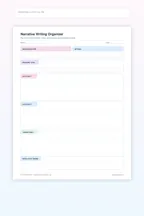
A one-page story-planning sheet for narrative and creative writing. It combines core story elements with a simple event path, giving writers more support than a blank beginning-middle-end page without turning the plan into a complicated plot diagram. The purpose is to make cause, choice, and consequence visible before the first draft begins.

Free printable
How-To Writing Graphic Organizer
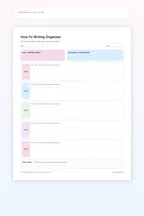
A one-page procedural-writing planner built around the reader’s task rather than a generic sequence alone. It combines a clear outcome, preparation or materials, numbered steps, transition words, and a final check for hidden assumptions. That makes it useful for recipes, classroom procedures, simple experiments, crafts, game instructions, and any explanation of how to complete a repeatable process.

Free printable
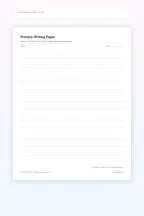
Printable Primary Writing Paper
A reusable writing-paper format for early elementary handwriting and composition, not a content worksheet. The key value is proportion and spacing: primary lines give children a visible baseline, top line, and middle guide for letter placement, while the included line-size variants let adults choose enough room for the writer’s current control instead of forcing every child onto the same ruling.

Free printable
Printable Story Writing Paper
A simple narrative-writing page intended for drafting and presentation after ideas have already been planned. The design deliberately stays quieter than a story map or graphic organizer: it does not tell the writer what the characters or events should be. The included variants change the balance between illustration and writing space so the same resource can support short illustrated stories, continuation pages, or text-heavy drafts.

Free printable
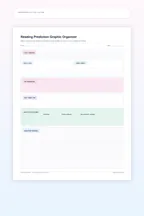
Reading Prediction Graphic Organizer
A before-and-during-reading organizer that treats prediction as evidence-based thinking rather than guessing. The page preserves the original prediction and then asks the learner to return to it after reading, which makes revision and metacognition part of the activity.