Work & Study · Free printable
Free Narrative Writing Graphic Organizer
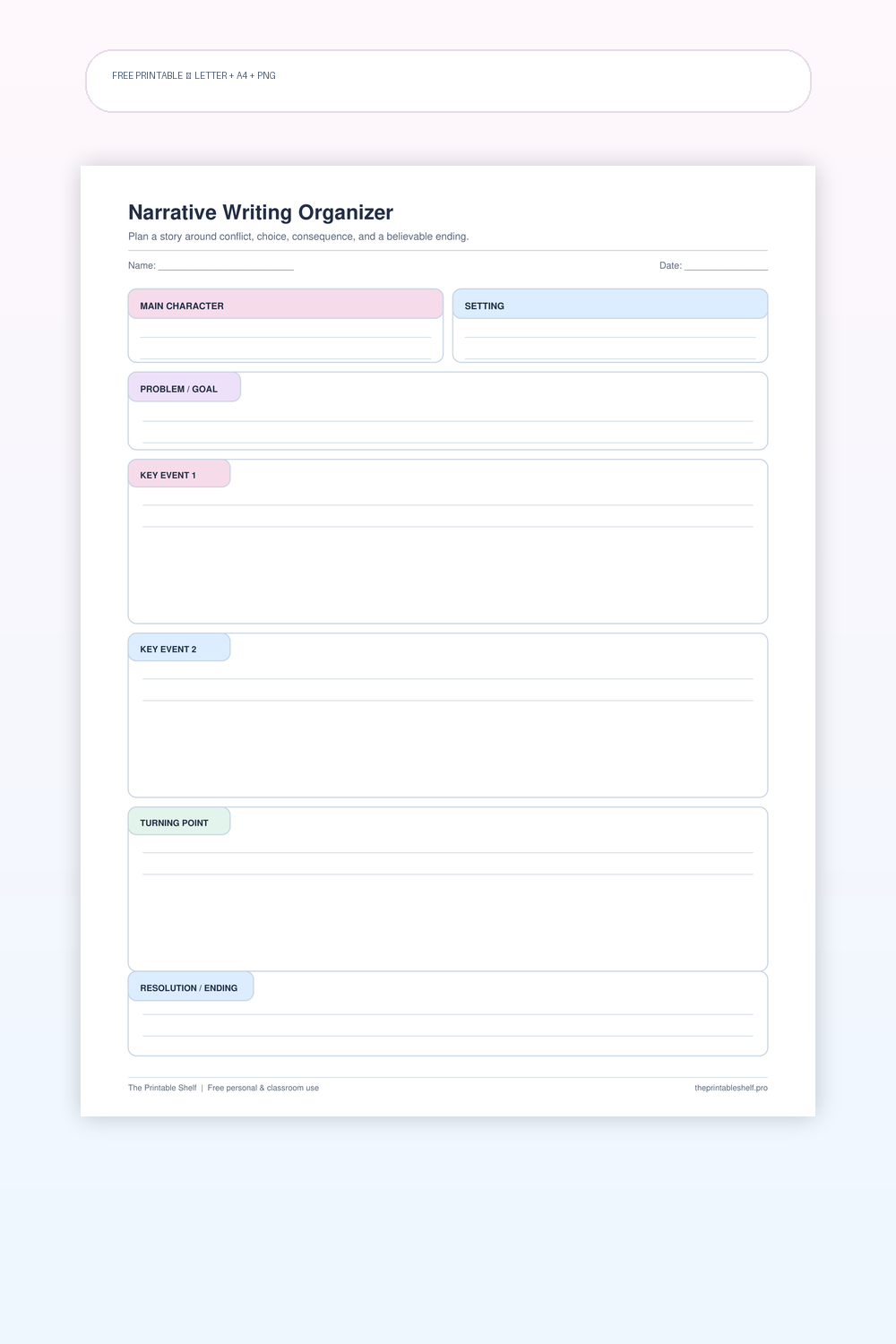
This narrative writing organizer helps writers plan the parts that make a story move: characters, setting, a clear problem or goal, key events, and a resolution. Use it before drafting to make sure the middle events grow from the conflict and the ending resolves what the story actually set up instead of appearing suddenly.
Edited by Tessa Vaughn · Planning & Organization Editor
Free download
Choose your file size
Print at 100% / Actual Size for the cleanest margins. Pick the paper size your printer normally uses.
Share to Google Classroom ↗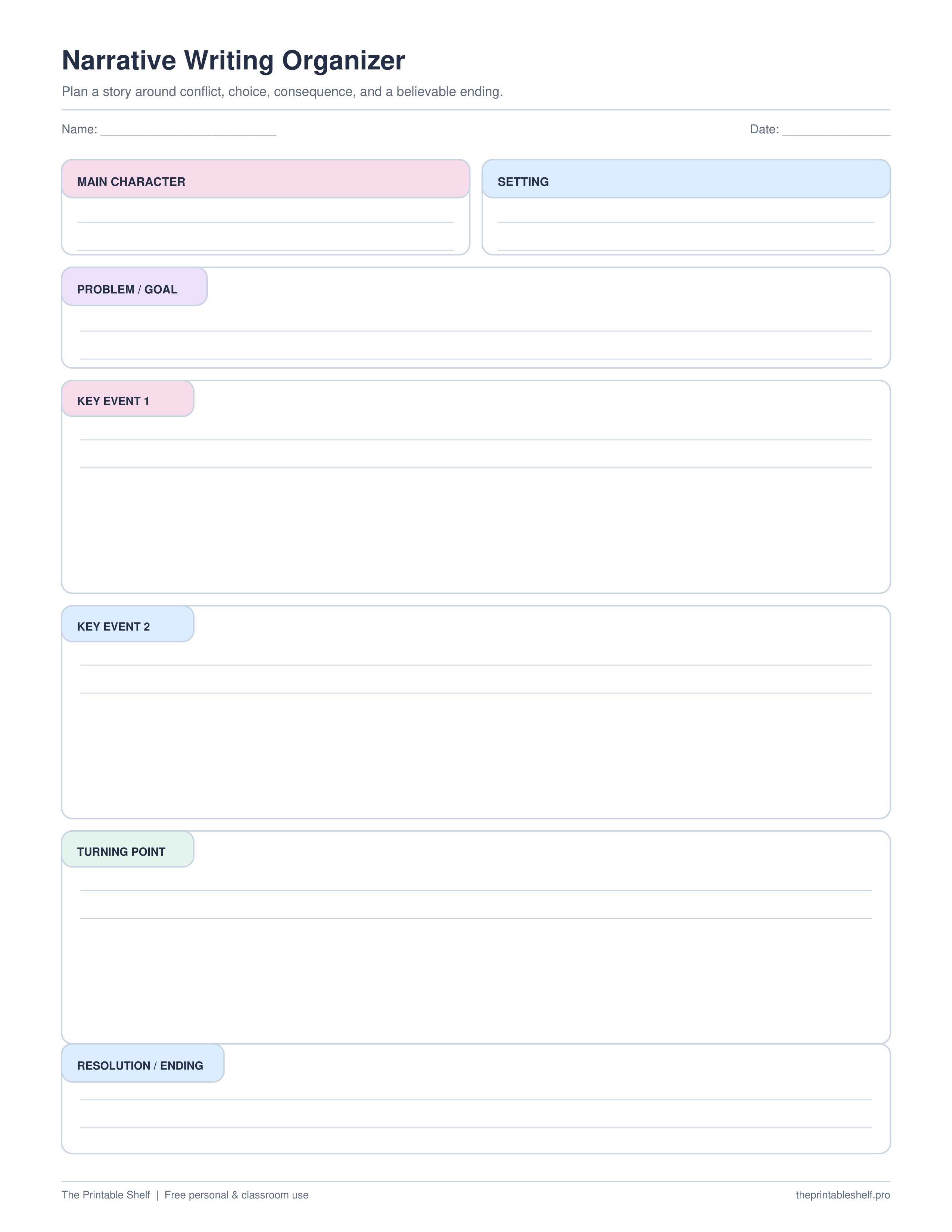
No sign-up required · personal/classroom use
More useful layouts
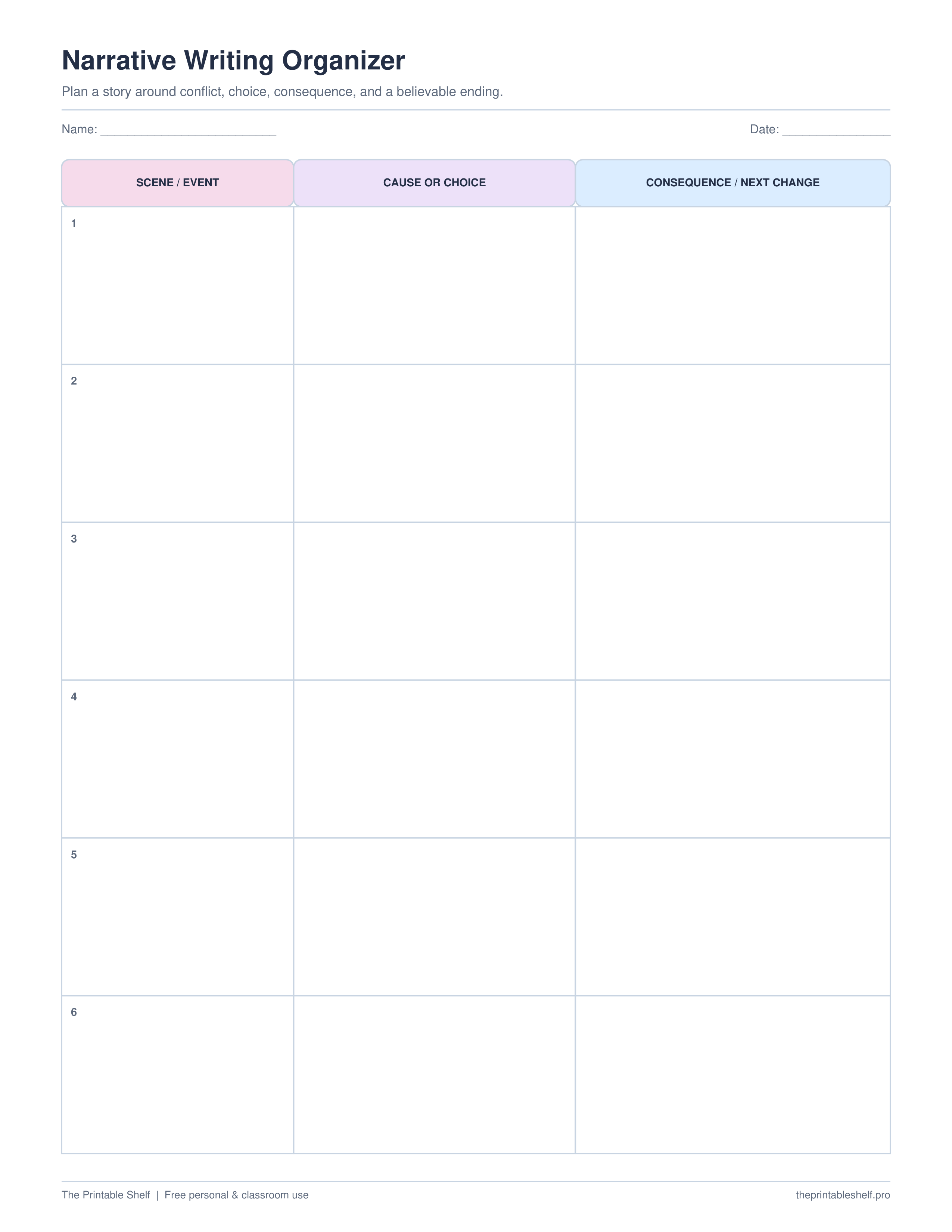
Scene sequence
Six rows connect each event to its cause or choice and the consequence that follows.
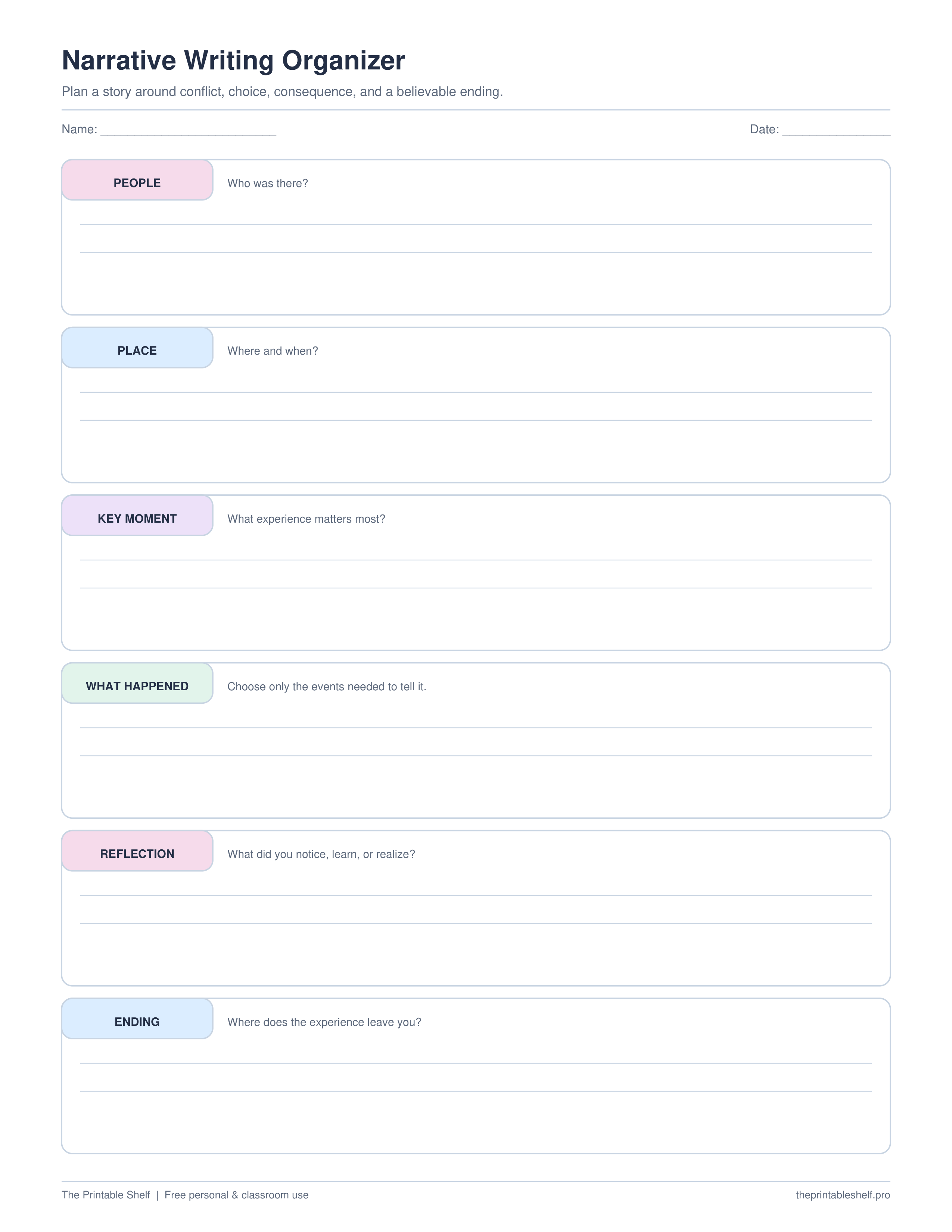
Personal narrative
Adapts the plan to people, place, key moment, events, reflection, and ending.
What you get in this download
A one-page story-planning sheet for narrative and creative writing. It combines core story elements with a simple event path, giving writers more support than a blank beginning-middle-end page without turning the plan into a complicated plot diagram. The purpose is to make cause, choice, and consequence visible before the first draft begins.
Using it in class or at home
Begin with the main character and setting, but keep both purposeful. Write only the character details that can affect what happens in the story, and identify where and when the setting matters. ‘A girl named Ava’ gives little direction; ‘Ava is impatient and is waiting alone at a delayed train station’ already suggests possible choices and problems. The organizer is a plan, so every detail should earn its space.
Write the central problem, goal, or conflict in one sentence. A story can contain many small difficulties, but the planner works best when one main tension drives the important events. Ask what the character wants and what prevents that from being easy. If you cannot answer both parts, the conflict may still be too vague to organize a complete narrative around it.
Plan the key events as a chain of choices and consequences instead of a list of unrelated things that happen. For each event, ask what caused it and what new situation it creates. A useful middle event either makes the problem harder, reveals information, forces a decision, or moves the character closer to a solution. Remove events that are entertaining but do not change anything important.
Decide where the story turns. This does not have to be a dramatic movie-style climax, especially in a short classroom narrative. It can be the decision, discovery, conversation, or action that changes what the character can do next. Mark that event so the draft gives it enough attention rather than rushing through the moment that actually resolves the tension.
Plan the resolution by looking back at the original problem or goal. The ending should show what happened because of the character’s final action and, when appropriate, what changed in the character or situation. Avoid solving the problem with information or help that was never set up earlier. If the resolution needs a key object, skill, or relationship, add a small hint to an earlier event on the planner.
Before drafting, tell the story aloud from the organizer without adding major new events. If the oral version makes sense, number the event boxes and begin the draft. If you keep inventing missing connections while speaking, add those connections to the plan first. For younger writers, use the story map or beginning-middle-end sheet when this page feels too detailed; for older writers, expand the event chain into a separate outline if the narrative needs several scenes.
Customize instead
Need a different title, paper size, or orientation? →
Use the free Graphic Organizer Maker to build a custom Venn, KWL, Frayer, story map, T-chart, main-idea, sequence, or cause-and-effect page.
Also in a free pack
Download this organizer together with related pages when you want one reusable master PDF instead of separate files.
Good matches for this page
Three ways to use it
Short story planning
Build one main conflict, choose only the events that change that conflict, and make sure the resolution grows from something established earlier.
Personal narratives
Use the real people and setting, then select the few events that best communicate the experience instead of recording everything that happened that day.
Revision planning
Map an existing draft back onto the organizer to spot missing setup, repeated events, a weak turning point, or an ending that does not resolve the original problem.
Common mistakes to avoid
Listing events that do not affect one another
Make each key event create a consequence, decision, discovery, or new obstacle for what comes next.
Starting with a vague conflict
State what the character wants and what specifically stands in the way.
Using a surprise solution with no setup
Seed the skill, object, information, or relationship needed for the resolution somewhere earlier in the plan.
Included layout options
Story overview
Plan character, setting, conflict, events, and resolution
Layout: One-page overview with a compact event chain
Scene sequence
Expand the middle of a longer narrative
Layout: Six event rows with cause, choice, and consequence prompts
Personal narrative
Adapt the structure to a real experience
Layout: People, place, key moment, what happened, reflection, ending
Classroom fit
Suggested grades, use modes & standards
Suggested grade bands
These are practical use ranges, not hard limits. Text complexity and the amount of teacher modeling matter more than the worksheet alone.
Good fit for
Scaffold level: Standard.
Common Core crosswalk
- W.3.3 · Write narratives with event sequences, details, and closure
- W.4.3 · Develop real or imagined experiences using effective technique and sequence
- W.5.3 · Develop narratives with clear event sequences and descriptive details
These codes are a practical crosswalk for skills this organizer can support. They are not a claim that the worksheet alone fully teaches or assesses the standard.
Common questions
What should a narrative writing organizer include?
A useful organizer should identify the main character, setting, central problem or goal, important events, a turning point, and a resolution that connects back to the original conflict.
Can I use this for personal narratives?
Yes. Replace invented character planning with the people involved, use the real setting, identify the central experience or problem, then choose only the events needed to tell that experience clearly.
How is this different from a story map?
A story map is often used to analyze a story that already exists. This organizer is written as a prewriting tool, with extra attention to how planned events lead toward a believable resolution.
Helpful guides
See where this organizer fits, when a different layout works better, and how to turn the completed page into a useful next step.
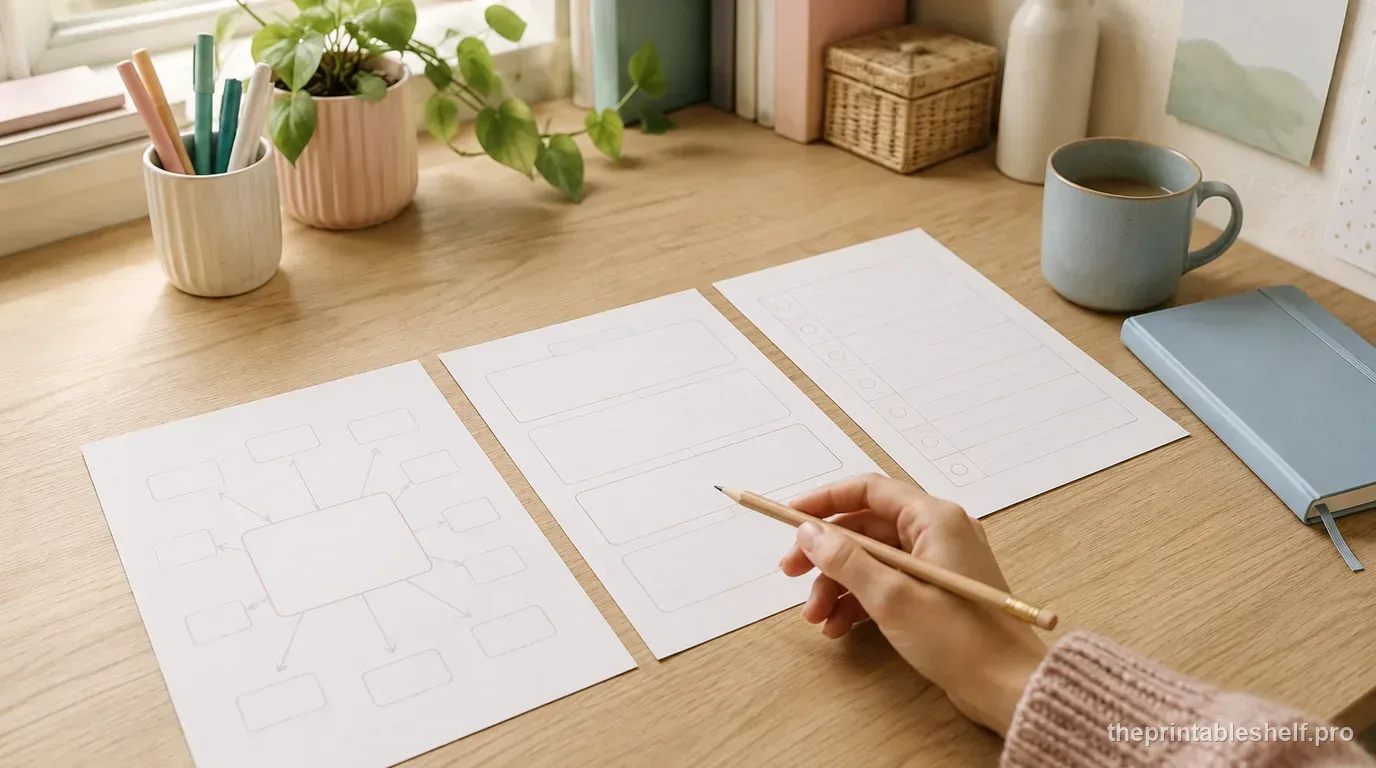
Free Writing Graphic Organizers: Which One to Use and When
Use free writing graphic organizers to plan ideas, structure paragraphs, compare evidence, sequence steps, and organize explanations before drafting.
Read guide →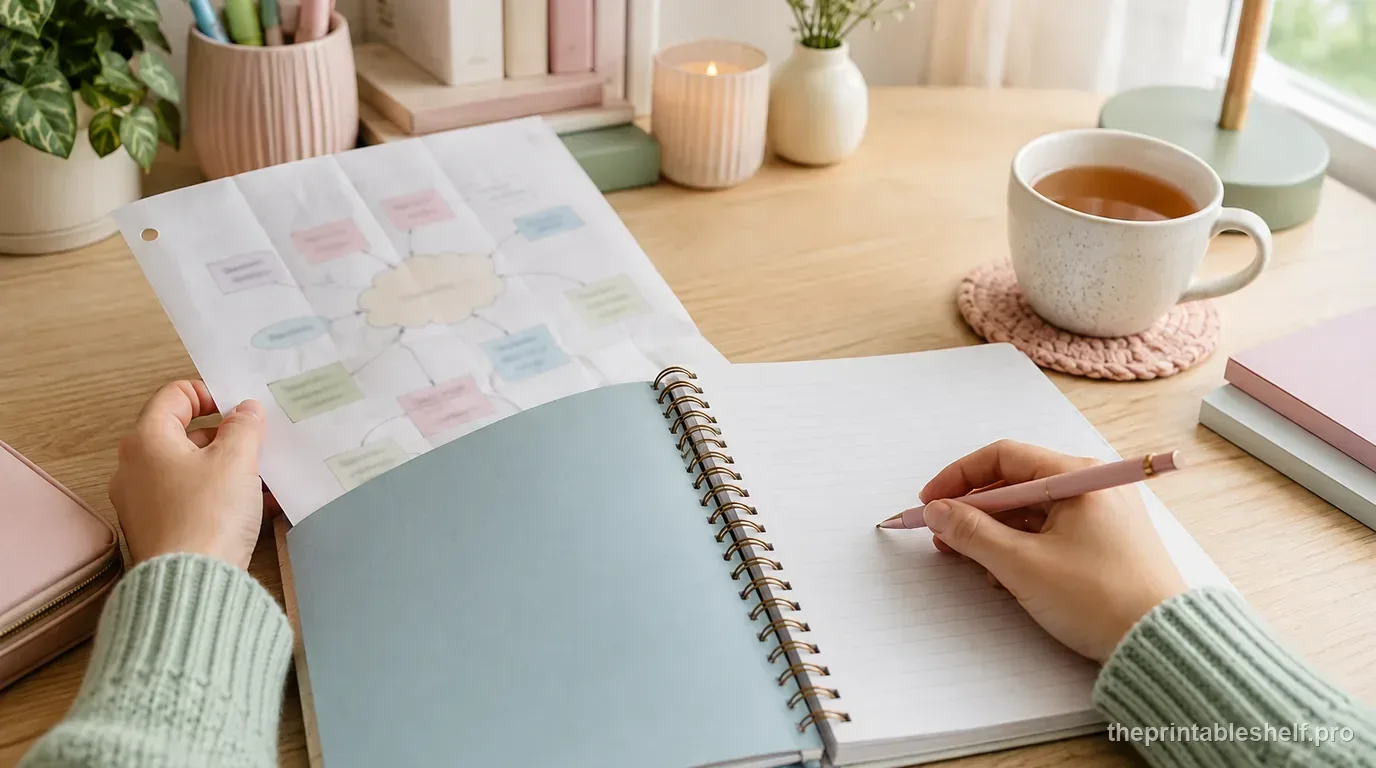
How to Use Graphic Organizers Effectively (Without Turning Them Into Busywork)
Learn how to choose, model, scaffold, and reuse graphic organizers so students think with them instead of simply filling in boxes.
Read guide →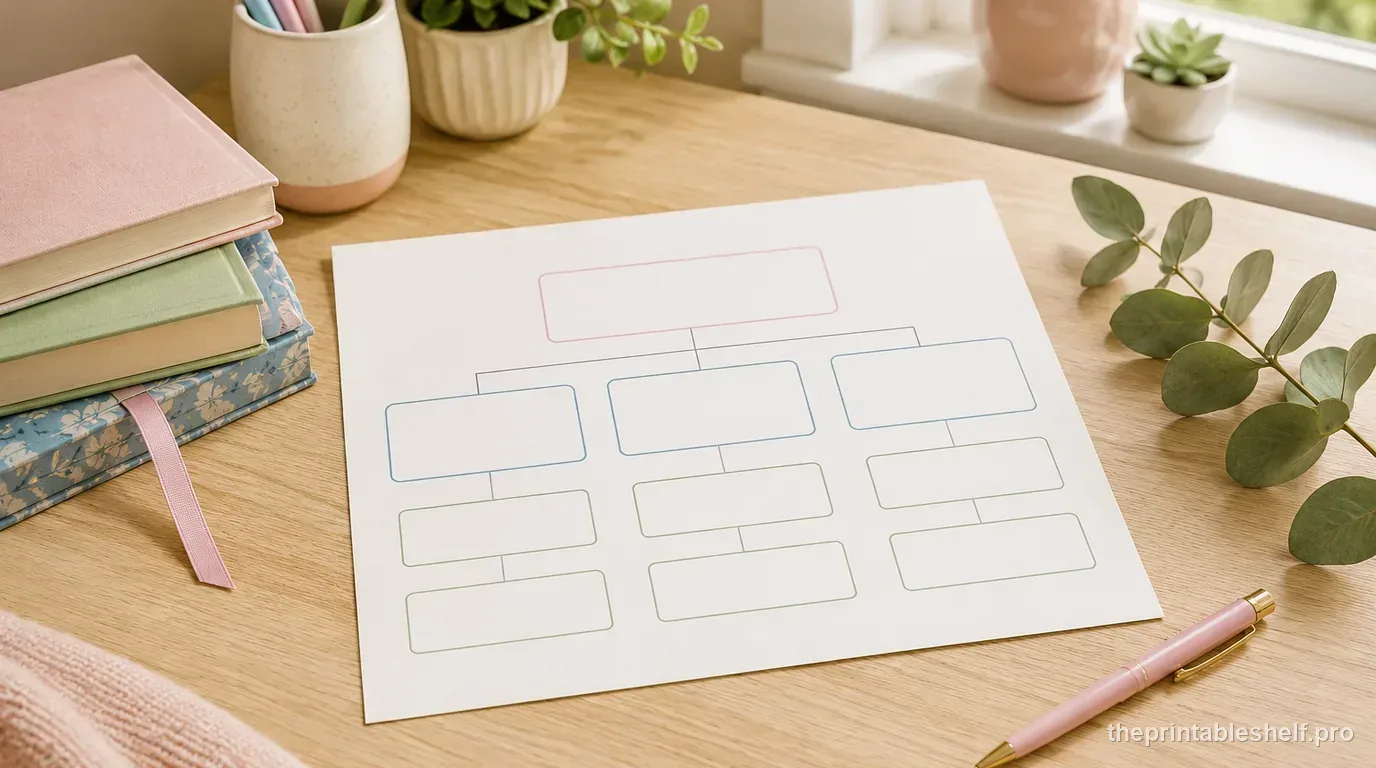
How to Use a Story Map for Better Reading Comprehension
Learn how to use a story map for characters, setting, problem, key events, and resolution, with a worked example and common fixes.
Read guide →Keep organizing
You might also like
Free printable
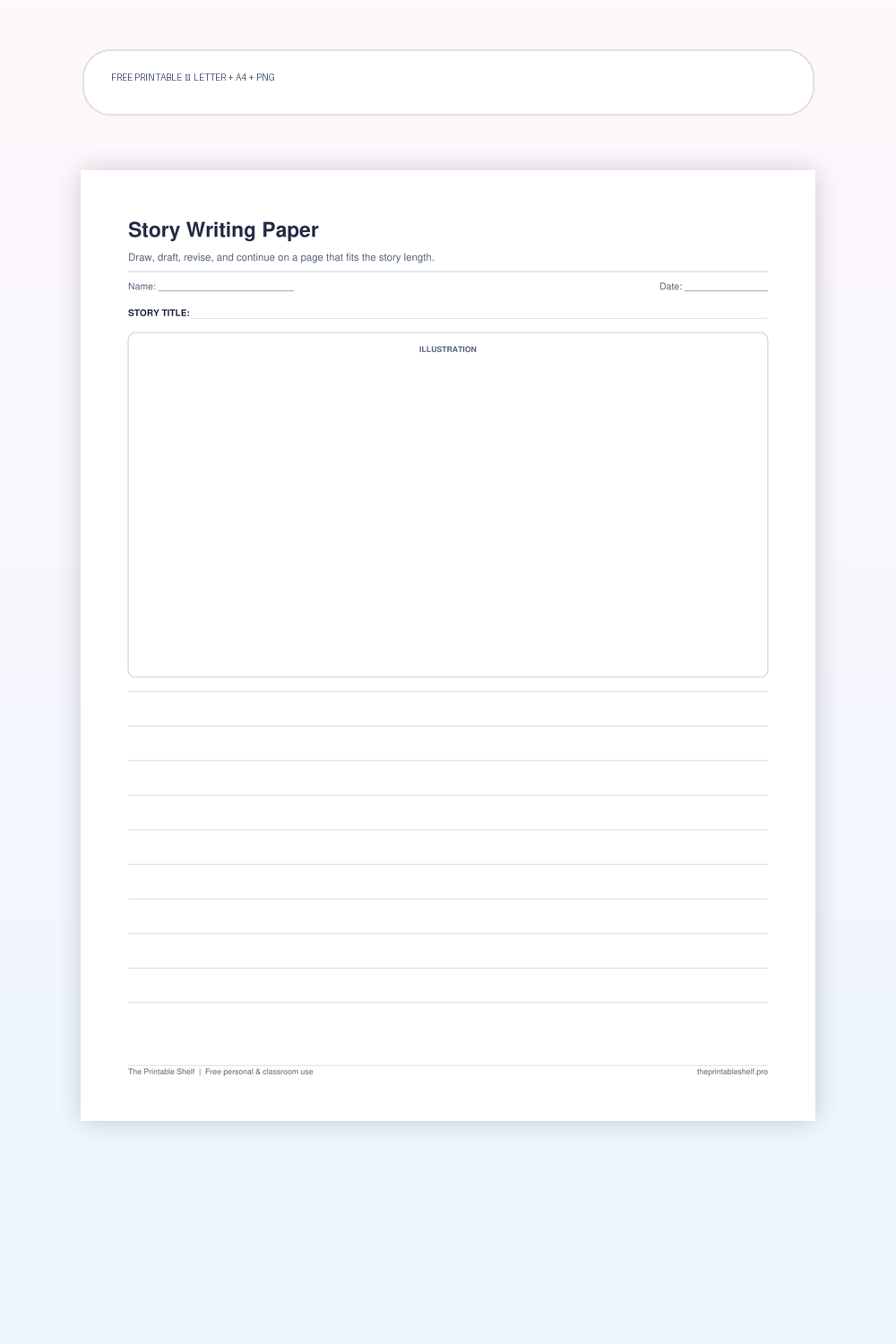
Printable Story Writing Paper
A simple narrative-writing page intended for drafting and presentation after ideas have already been planned. The design deliberately stays quieter than a story map or graphic organizer: it does not tell the writer what the characters or events should be. The included variants change the balance between illustration and writing space so the same resource can support short illustrated stories, continuation pages, or text-heavy drafts.
Free printable
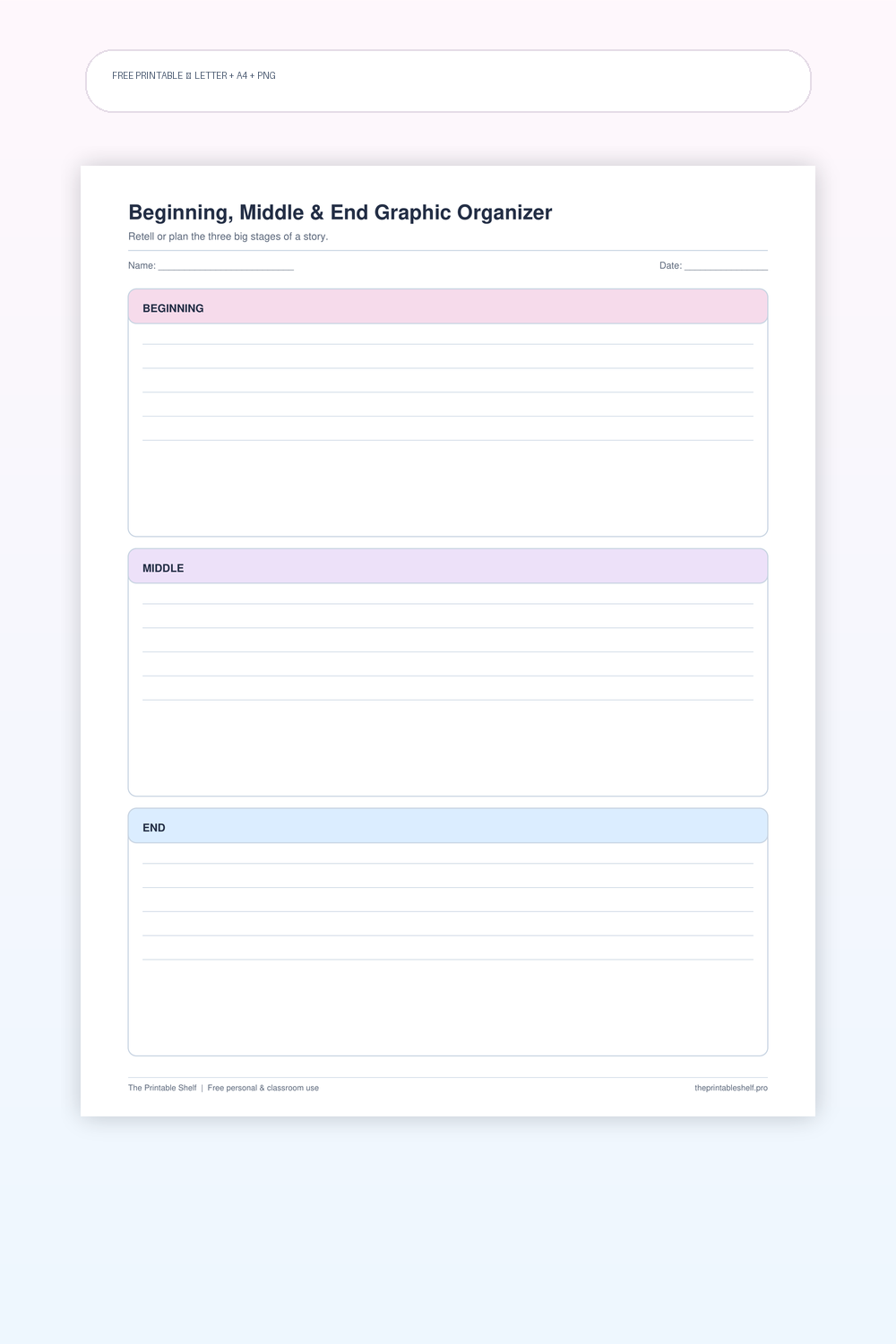
Beginning, Middle, and End Graphic Organizer
A three-part story structure page with enough room to write or sketch the most important events in each stage. It is deliberately simpler than a full story map or five-step sequence organizer, making it especially useful when the goal is basic retelling, summarizing, or planning a short narrative without overwhelming the learner with too many boxes.
Free printable
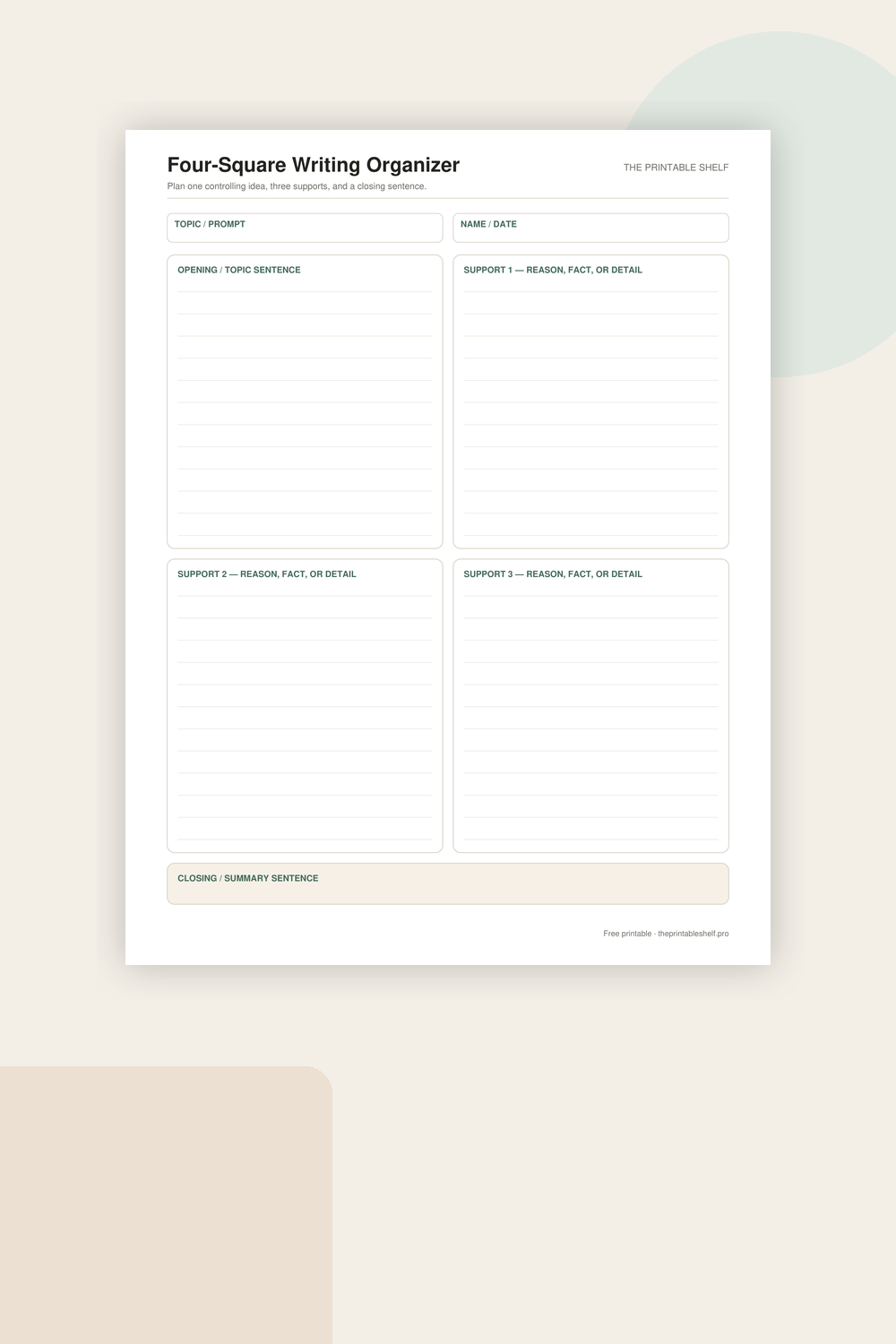
Four-Square Writing Organizer Printable
A practical four-box prewriting page based on the familiar four-square structure, simplified for clean one-page planning. The layout separates the controlling idea from three supporting points and adds a dedicated closing area so the writer can test whether the paragraph has a beginning, development, and purposeful ending before drafting.